
HVAC Design & Load Calculation Resource Center
Learn the fundamentals of Manual J load calculations, Manual S equipment selection, Manual D duct design, HVAC permits, energy code requirements, residential HVAC design, and HVAC system sizing.
Start Here
- Manual J calculates heating and cooling loads.
- Manual S matches equipment to the calculated load.
- Manual D designs ductwork for proper airflow.
- Energy codes increasingly depend on accurate HVAC design documentation.
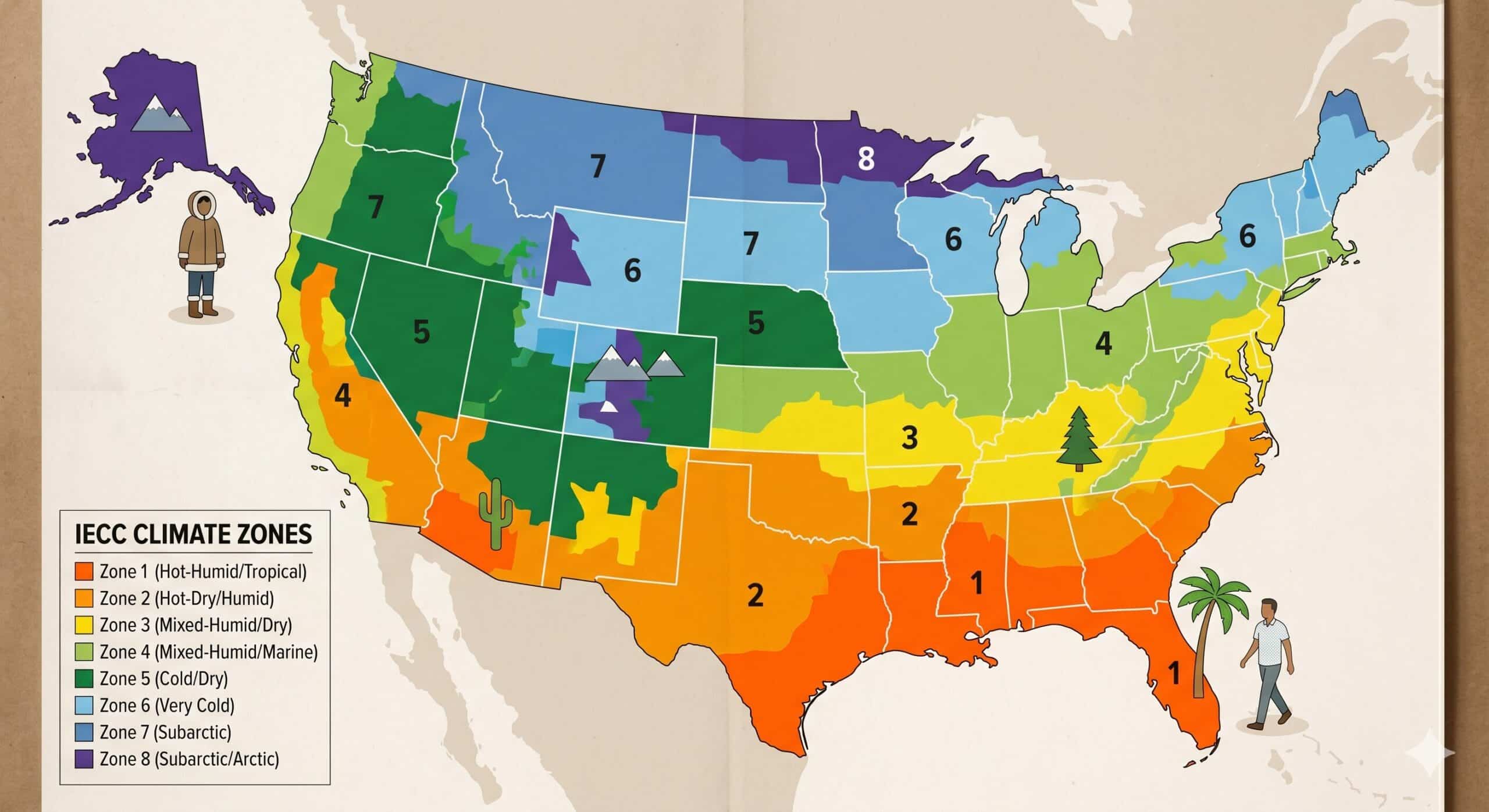
HVAC Climate Zones Across the United States
The HVAC Design & Load Calculation Resource Center was created to help homeowners, builders, architects, HVAC contractors, and permit departments better understand Manual J, Manual S, and Manual D calculations. These ACCA design standards form the foundation of modern HVAC system design and are used to determine heating loads, cooling loads, equipment selection, airflow requirements, and duct sizing. Whether you are planning a new construction project, replacing an existing HVAC system, applying for permits, or simply trying to understand why a home is uncomfortable, the resources below explain the entire design process from start to finish. Explore our guides, visual examples, climate zone references, and engineering resources to learn how proper HVAC design improves comfort, efficiency, indoor air quality, and code compliance.
HVAC Design Visual Library
Use these diagrams to understand how heat gain, heat loss, infiltration, humidity, climate zones, and Manual J load calculations affect HVAC sizing.
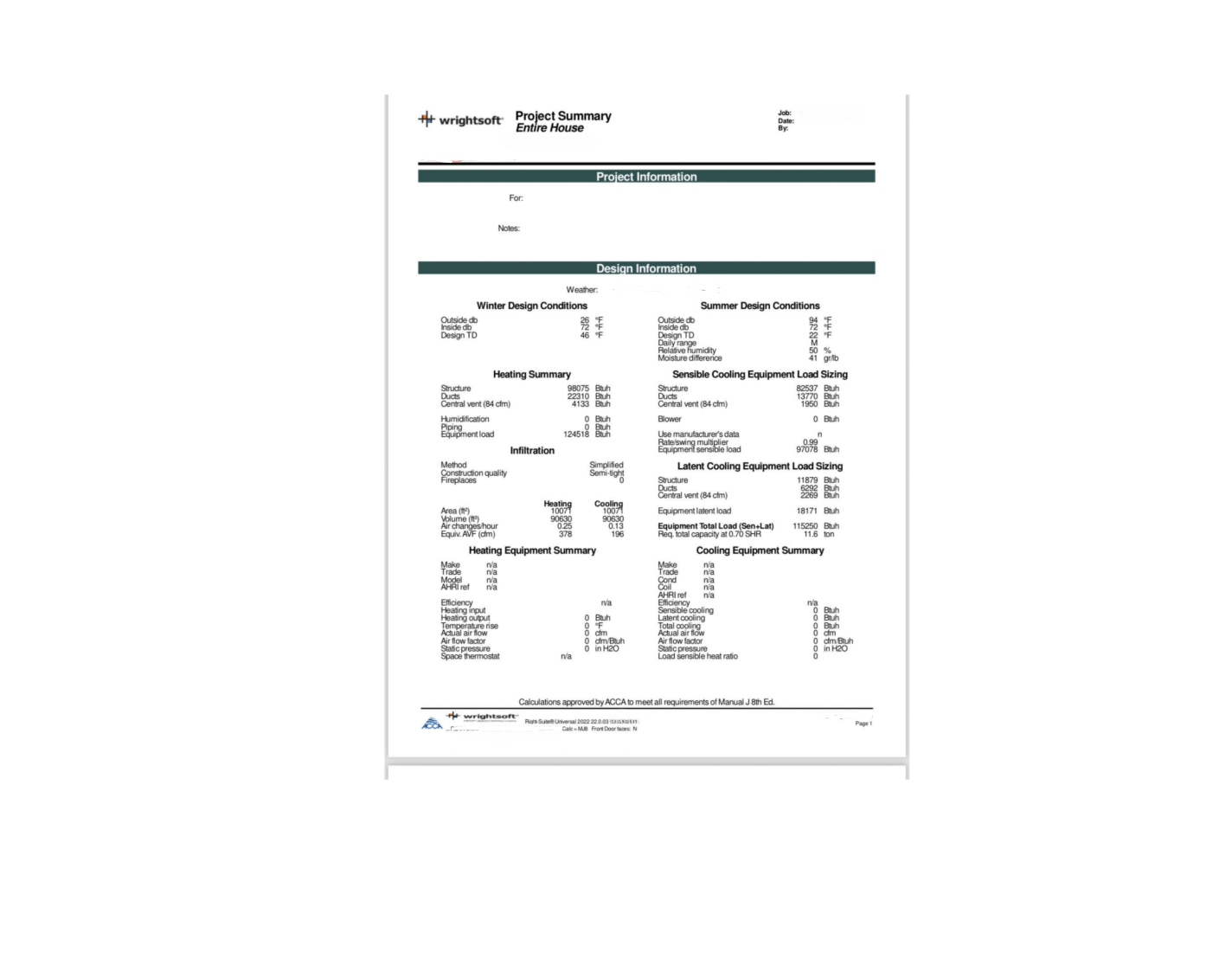
Manual J Project Summary
Example report summary showing heating load, cooling load, latent load, infiltration, and sizing inputs.
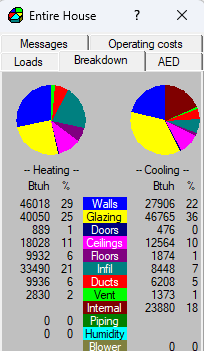
Whole-House Load Breakdown
Shows where heating and cooling loads come from across the home.

3D Load Calculation Model
Visual model showing how room-by-room load calculations connect to the building layout.
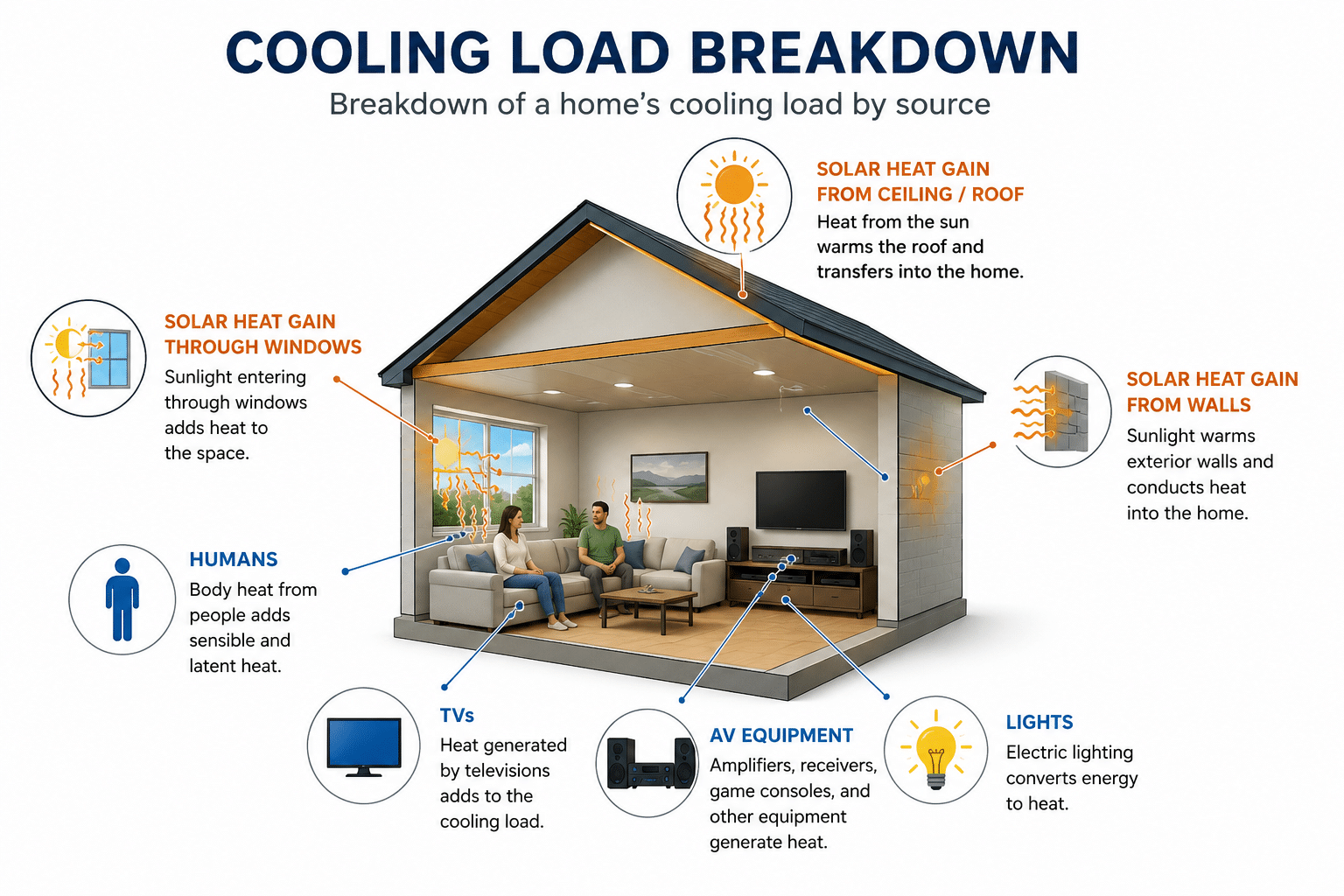
Sources of Cooling Load
Explains how windows, walls, roof, occupants, appliances, and infiltration add heat to a home.
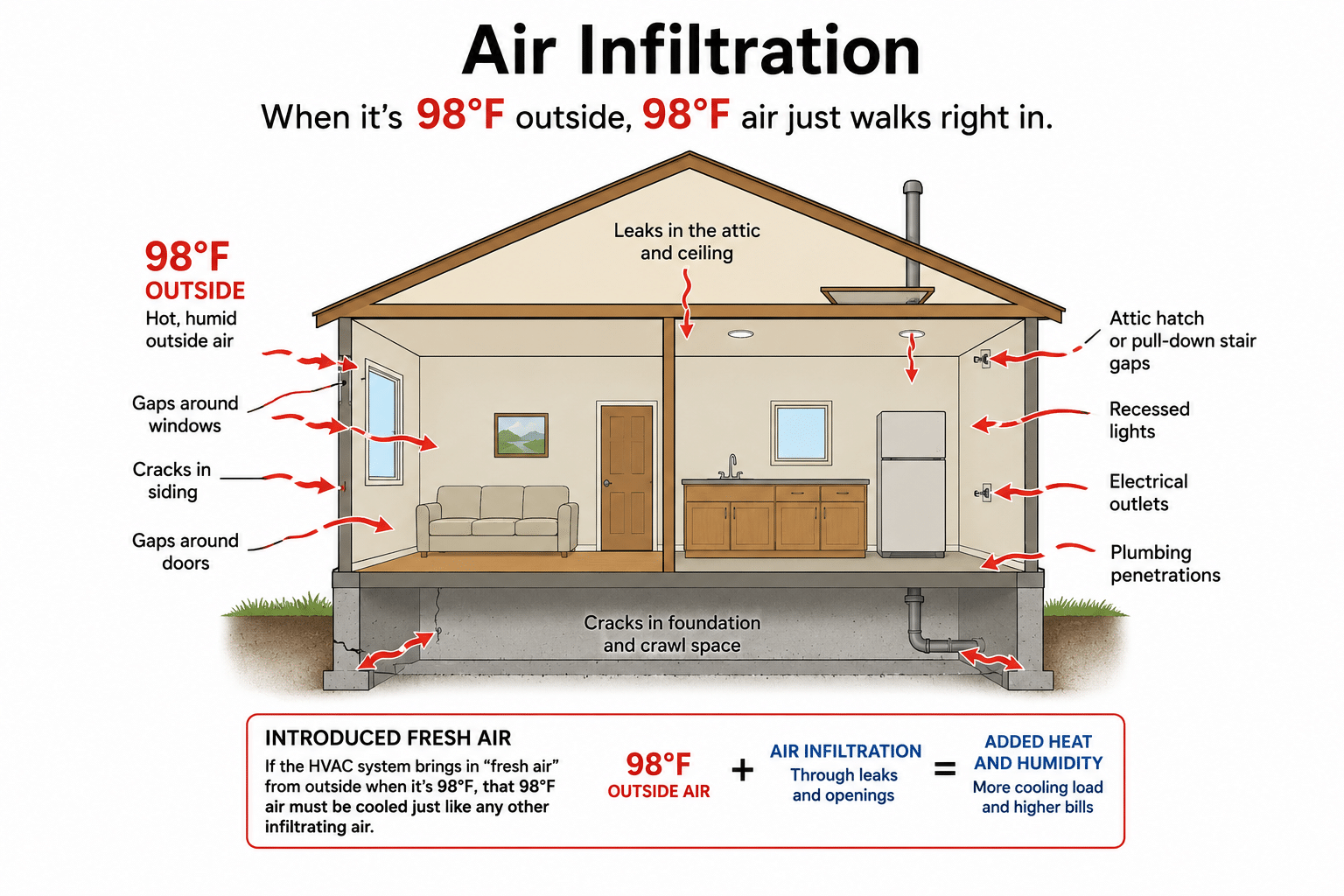
Air Infiltration Heat Gain
Shows why outdoor air leakage matters in hot and humid climate HVAC design.

How an ERV Works
Shows how outdoor air is tempered before entering the home through an ERV system.
Energy Efficiency & Guides for Manual J, S, and D
These three design steps work together. The load determines the equipment, and the duct design determines whether the system can actually deliver comfort.
Manual J
Manual J calculates the heating and cooling load of the home based on construction, climate, windows, insulation, infiltration, orientation, and room-by-room conditions.
Learn about Manual J →Manual S
Manual S uses the calculated load to help select HVAC equipment with the right sensible capacity, latent capacity, and heating performance.
Learn about Manual S →Manual D
Manual D designs duct systems for airflow, static pressure, velocity, branch sizing, and comfort across individual rooms.
Learn about Manual D →Try the Free HVAC Load Calculator
Need a quick starting point before ordering a professional Manual J? Use our free HVAC load calculator to estimate basic heating and cooling capacity from square footage, climate zone, ceiling height, insulation, windows, and occupancy.
Is Your Current HVAC Unit Oversized or Undersized?
Improper HVAC sizing can cause humidity problems, comfort complaints, short cycling, hot rooms, cold rooms, poor airflow, and higher operating costs. A Manual J calculation helps separate guesswork from design.
Need a Professional HVAC Load Calculation?
Get a professional Manual J load calculation for equipment sizing, code documentation, design review, additions, replacements, and residential HVAC planning.
Why is an oversized HVAC system a problem?
Oversized HVAC systems short cycle, reduce humidity control, and increase energy costs. Undersized systems run constantly and fail to maintain comfort.
What happens when I skip a Manual S?
You cannot perform a Manual D duct design without a Manual S because Manual S determines the specific equipment’s air-moving capabilities.
Do I Need a Manual J for a Permit?
Yes. Many jurisdictions require a Manual J calculation to approve HVAC permits because it helps confirm proper system sizing.
Does a mini-split installation require a Manual J calculation?
Yes. Precise Manual J calculations are critical for mini-split installations to ensure the variable-speed compressor operates within its most efficient range.
Do I need a new Manual J for a 500 sq ft home addition?
Yes. Any addition that changes the footprint or building envelope usually requires a new Manual J to determine whether the existing HVAC system can handle the added load.
Manual D vs. Manual Q: What is the difference for residential ducting?
Manual D is the ACCA standard for residential duct design. Manual Q covers low-pressure, low-velocity commercial duct systems.
Why does my second floor stay hot after a Manual J?
A Manual J calculates load. Comfort issues upstairs often come from duct balancing, airflow problems, return-air issues, insulation, or zoning limitations.
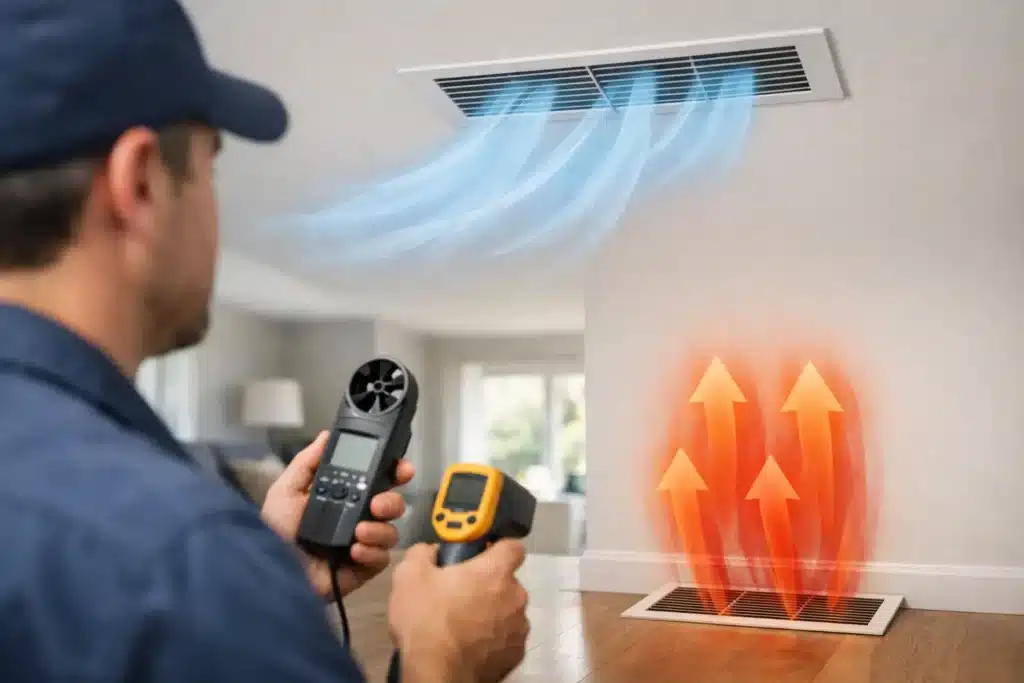
How to Fix Unbalanced Airflow in Your Home
Learn how to fix unbalanced airflow through homeowner checks, duct diagnostics, and Manual D design solutions that restore room-by-room comfort daily.

Can Oversized HVAC Cause Humidity Problems?
Can oversized HVAC cause humidity problems? Yes – short cycling can leave air cool but damp, hurting comfort, efficiency, and system performance.

How to Verify a Manual J Report
Learn how to verify manual j report details, spot sizing errors, and confirm inputs, assumptions, and code-ready HVAC load accuracy.

Guide to Code Compliant HVAC Plans
A practical guide to code compliant HVAC plans, covering Manual J, S, and D design, permits, inspections, airflow, sizing, and long-term comfort.

Manual J Versus Rule of Thumb
Manual J versus rule of thumb sizing explains why accurate HVAC load calculations beat guesswork for comfort, code compliance, and lower costs.

How to Calculate Room by Room Loads
Learn how to calculate room by room loads accurately for HVAC design, equipment sizing, code compliance, airflow balance, and better comfort.
Code Compliant HVAC Design Service Explained
Learn how a code compliant hvac design service improves sizing, duct layout, comfort, efficiency, and inspection readiness for every project.

Best Residential HVAC Design Services Explained
Learn what sets the best residential hvac design services apart, from Manual J, S, and D accuracy to code compliance, comfort, and lower costs.

Latent Load vs. Sensible Heat: The Difference That Makes or Breaks HVAC Sizing
Learn latent load vs sensible heat, why both matter in Manual J, and how proper HVAC sizing improves comfort, humidity control, and efficiency.
Why is an oversized HVAC system a problem?
Oversized HVAC systems short cycle, reduce humidity control, and increase energy costs. Undersized systems run constantly and fail to maintain comfort.
What happens when I skip a Manual S?
You cannot perform a Manual D duct design without a Manual S because the Manual S determines the specific equipment's air-moving capabilities. Skipping Manual S leads to improperly sized ducts that cannot handle the system's actual static pressure
Does a mini-split installation require a Manual J calculation?
Yes. Precise Manual J calculations are critical for mini-split installations to ensure the variable-speed compressor operates within its most efficient range. An oversized mini-split will struggle with dehumidification, which is a major concern in humid climates like Florida and Texas.


Do I Need a Manual J for a Permit?
Yes, many jurisdictions require a Manual J calculation to approve HVAC permits because it ensures proper system sizing.
Do I need a new Manual J for a 500 sq ft home addition?
Yes. Any addition that changes the footprint or building envelope of your home requires a new Manual J to determine if your existing HVAC system has the capacity to handle the additional load or if a separate system (like a mini-split) is required
Manual D vs. Manual Q: What is the difference for residential ducting?
Manual D is the ACCA standard for residential duct design, while Manual Q covers low-pressure, low-velocity duct systems in commercial buildings. For a home, Manual D is the required protocol for balancing airflow.
Why does my second floor stay hot after a Manual J?
Lack of Manual D duct balancing.