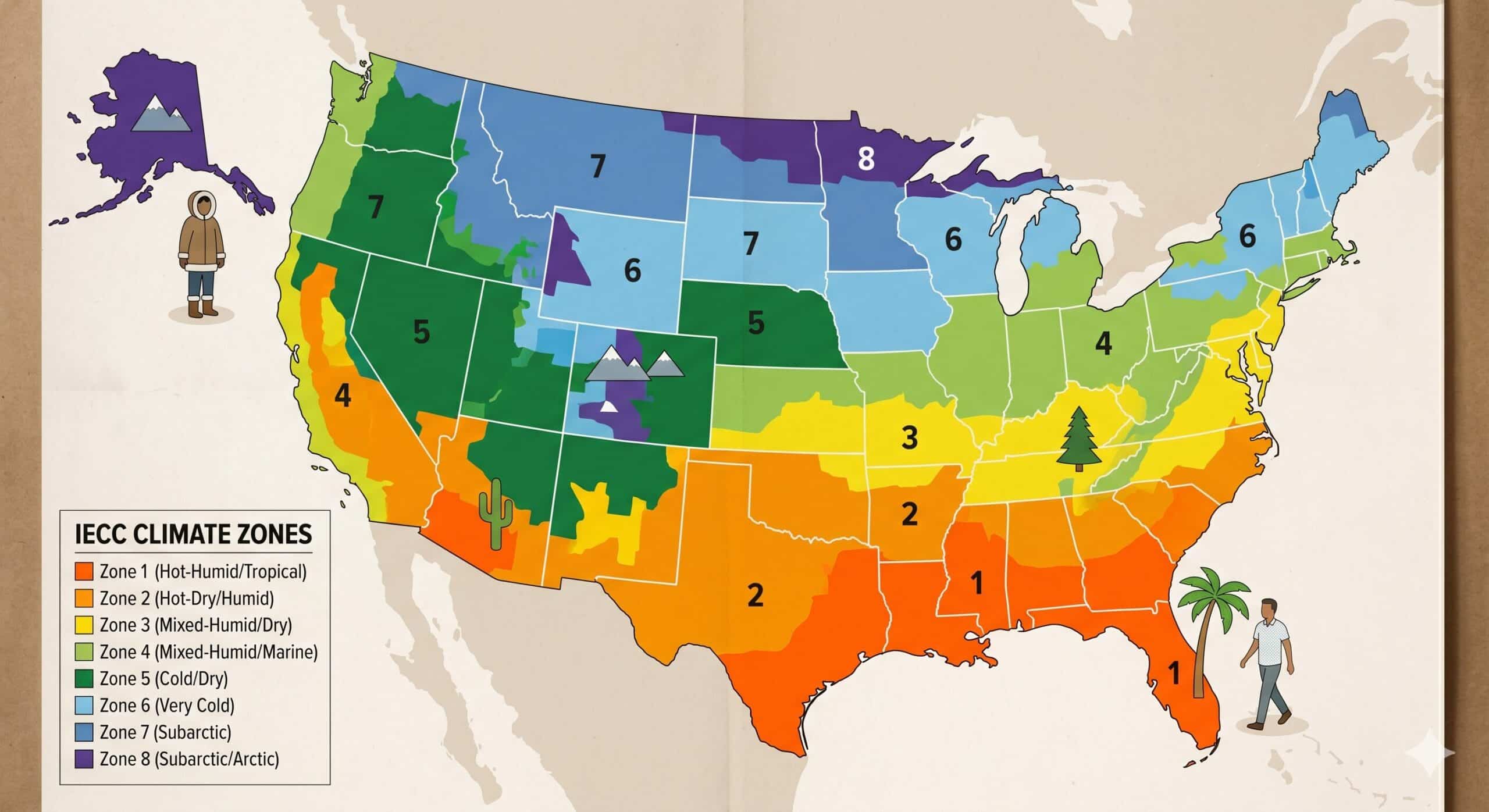
Homeowners, builders, and contractors depend on accurate Baton Rouge Manual J load calculations to properly size heating and cooling systems. Our team provides professional HVAC design services including Manual J load calculations, Manual S equipment selection, and Manual D duct design for residential projects throughout the Baton Rouge metropolitan area.
Baton Rouge Climate and HVAC System Design
The climate in Baton Rouge requires HVAC systems that can perform reliably during long, humid summers. Summer temperatures frequently climb into the 90s, while humidity levels remain high for much of the year. These conditions place heavy demand on residential cooling systems.
Meanwhile, winters remain relatively mild but still require dependable heating equipment. Because of this climate pattern, properly sizing HVAC equipment becomes extremely important for comfort and efficiency.
A Baton Rouge Manual J load calculation evaluates insulation levels, window sizes, building orientation, square footage, air leakage, and local climate data. These factors determine the true heating and cooling requirements of the home.
Without accurate calculations, systems often get installed using rough square-foot estimates. However, this approach creates serious performance problems. Oversized systems cycle on and off too frequently and struggle to remove humidity. Undersized systems cannot maintain comfortable temperatures during extreme weather. Accurate load calculations help prevent these issues and improve system performance.
Manual J, Manual S, and Manual D HVAC Design
Professional HVAC design follows three important steps. First, the Manual J load calculation determines the heating and cooling requirements of the home. Next, Manual S equipment selection identifies the correct system capacity to match those requirements.
Finally, Manual D duct design determines the proper duct sizing and airflow distribution needed to move conditioned air throughout the home. Well-designed duct systems help maintain balanced airflow and consistent temperatures in every room.
When these three design methods work together, HVAC systems operate more efficiently and deliver dependable long-term performance.
Cities Near Baton Rouge We Serve
We regularly provide HVAC load calculations and duct design services throughout the Baton Rouge region, including:
Lafayette, New Orleans, Metairie, Kenner, & Hammond, LA.
Homes in these nearby communities experience similar regional climate conditions. Therefore, accurate HVAC design remains essential for maintaining comfort and energy efficiency.
Professional HVAC Design Services
With more than 30 years of HVAC design experience, our team provides accurate Manual J load calculations, Manual S equipment selection, and Manual D duct design for residential projects across the United States.
Proper HVAC design improves comfort, reduces energy waste, and helps systems operate efficiently. As a result, builders, contractors, and homeowners rely on professional load calculations before installing new heating and cooling equipment.