
Heat Gain & Heat Loss: The Thermodynamics a Load Calculation Has to Get Right
Every comfort problem in a home traces back to two flows of energy — heat pushing in and heat escaping out. Measure them correctly and the right equipment almost picks itself.
Heat gain is energy moving into the home in summer that the cooling system must remove; heat loss is energy escaping in winter that the heating system must replace. A Manual J load calculation measures both for a specific house — separating the sensible (temperature) load from the latent (moisture) load — because the size and source of those flows, not the square footage, decide what equipment the home actually needs.
- Heat always moves from warm to cool — into the house in summer (gain), out in winter (loss).
- Cooling load is the sum of several independent paths: conduction, solar through glass, air infiltration, internal gains, and duct gains.
- Cooling load splits into sensible (temperature) and latent (moisture) — and the moisture side is the one most often missed.
- An oversized system short-cycles and never runs long enough to remove moisture, so the house ends up cold and damp.
- Heating and cooling loads are driven by different factors, so the two numbers rarely match — yet one system has to serve both.
What heat gain and heat loss actually mean
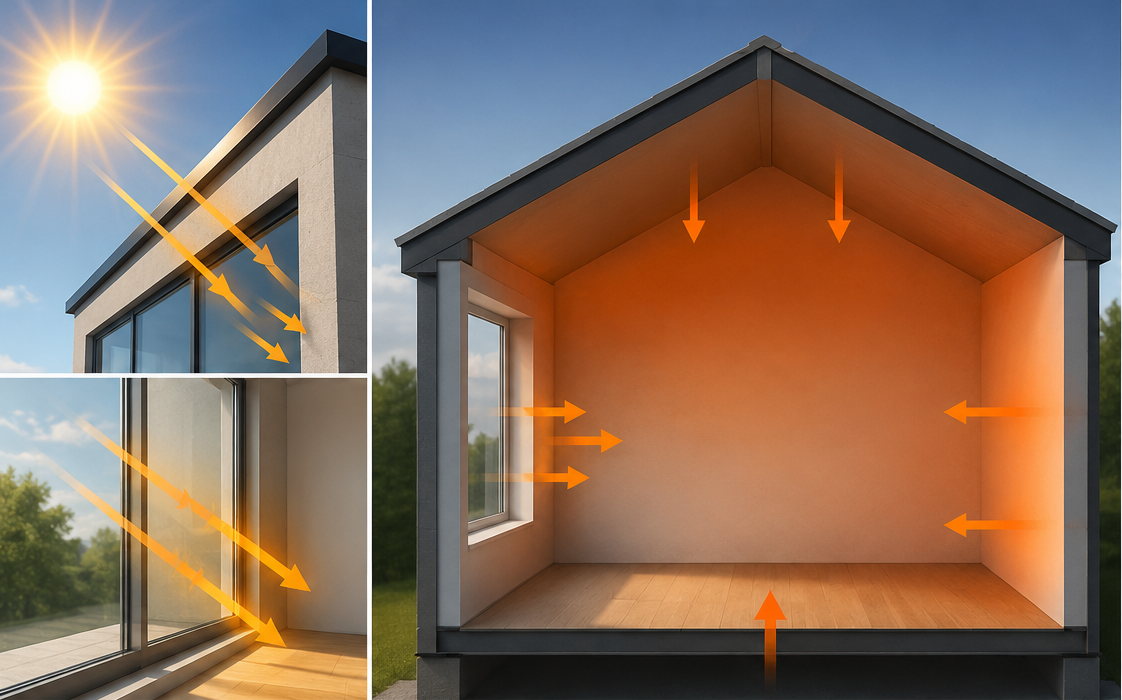
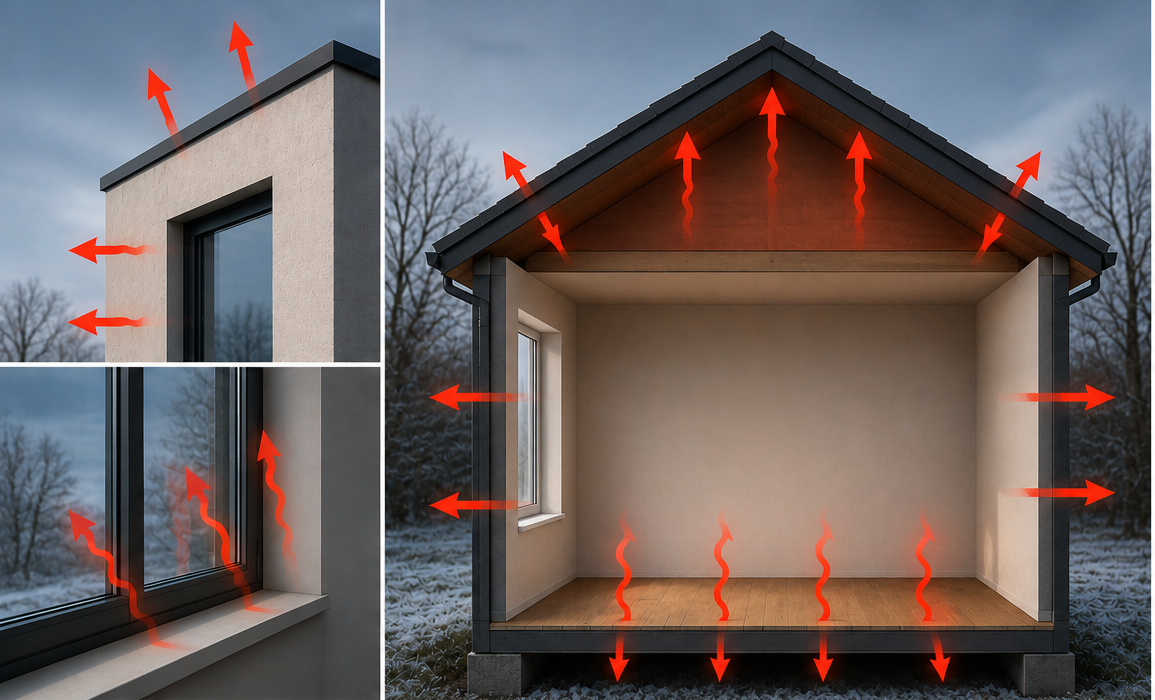
Heat always moves from warmer to cooler. In summer the outdoors is hotter than the indoors, so heat pushes into the home — that inbound energy is heat gain, and the air conditioning has to remove it to hold the indoor temperature. In winter the indoors is warmer than the outdoors, so heat escapes out — that outbound energy is heat loss, and the heating system has to replace it.
A load calculation quantifies both. The cooling load is the total heat gain the system must reject on a design summer day; the heating load is the total heat loss it must make up on a design winter day. Those two numbers rarely match, which is one reason a system sized correctly for one season can be wrong for the other.
Where cooling loads come from
Heat gain is not one thing. It arrives through several distinct paths, and a credible calculation accounts for each one separately rather than lumping them together:
- Conduction through the envelope — heat passes through walls, roof or ceiling, windows, doors, and floors, driven by the temperature difference and how well each surface resists heat flow.
- Solar gain through glazing — sunlight through windows is a major load that swings with orientation, glass type, and shading. West-facing glass on a summer afternoon behaves nothing like north-facing glass.
- Air infiltration — outdoor air leaking in through gaps and penetrations brings its heat and its moisture with it. This is where airtightness and ventilation come directly into play.
- Internal gains — people, lighting, cooking, and appliances all release heat inside the home, and occupants add moisture too.
- Duct gains — ductwork running through hot attics or crawlspaces picks up heat before the air reaches the room, which is why duct design is part of the same conversation.

Sensible vs. latent — two loads, one system
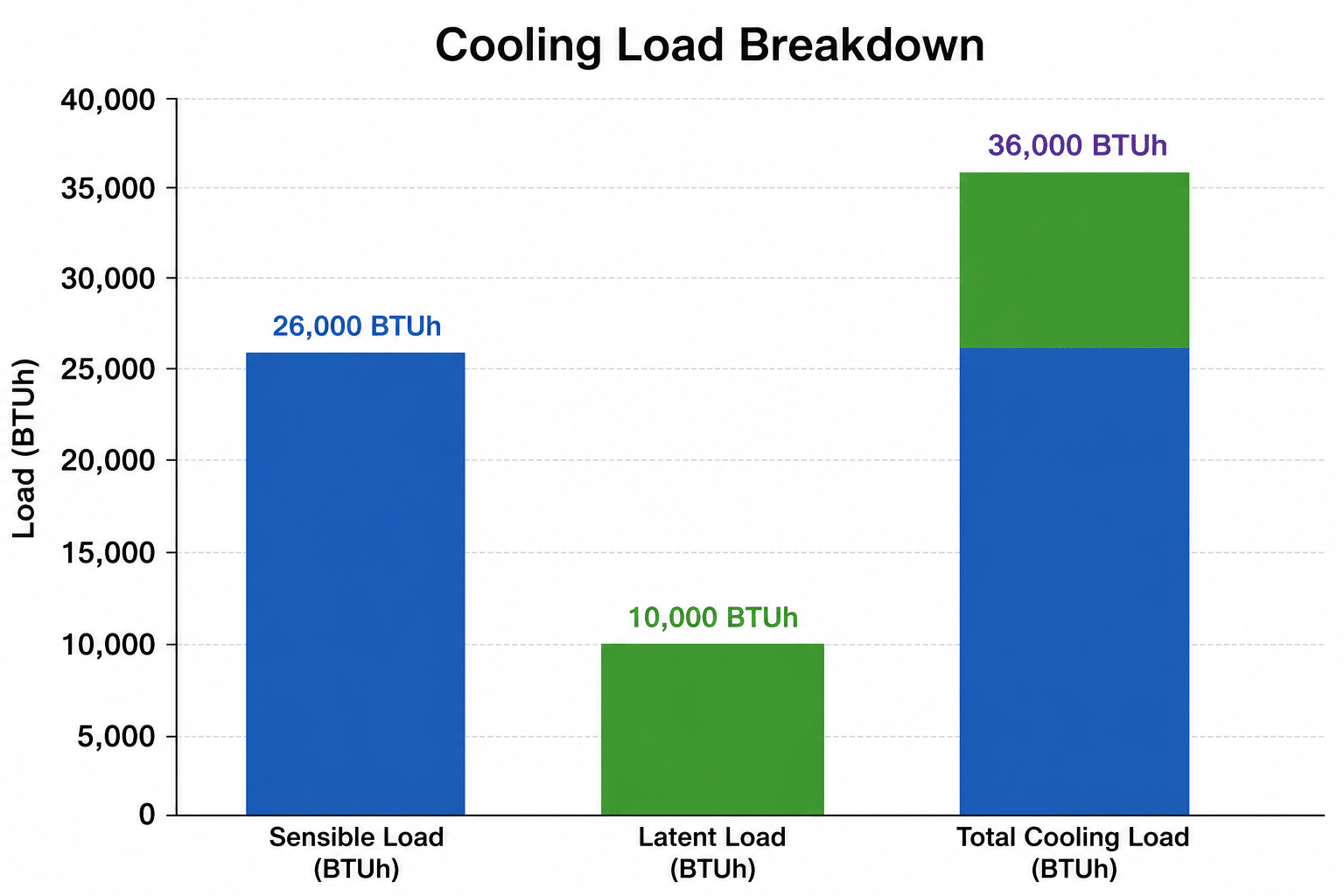
This is the distinction that separates a real load calculation from a guess. Cooling load is not just about temperature — it is about temperature and humidity.
| Load | What it is | Removing it… |
|---|---|---|
| Sensible | The heat you can feel and measure with a thermometer — conduction, solar, warm bodies, warm air leaking in. | lowers the temperature. |
| Latent | The energy tied up in moisture in the air — from people, cooking, showers, and humid outdoor air. | lowers the humidity. |
Add them together and you get the total: sensible load + latent load = total cooling load. A system sized only on sensible heat will cool the air quickly but leave it damp and clammy. In humid regions the latent share can be substantial, which is exactly why a hot, humid climate demands its own careful accounting rather than a generic estimate.
The moisture side — why latent load is so easy to underestimate
Air conditioning dehumidifies as a side effect of cooling: warm, moist indoor air passes over a cold coil, water condenses out, and drains away. But that only works if the system is sized and run so the coil stays cold long enough to wring out moisture.
An oversized system is the classic failure. It cools the air so fast that it satisfies the thermostat and shuts off before it has run long enough to pull much water out of the air. The result is a house that is cold and damp at the same time — the worst of both. This is one of the strongest arguments against the “bigger is safer” instinct, and one of the clearest payoffs of an accurate load calculation feeding correct equipment selection.

Heat loss — the winter side of the equation
Heat loss is the mirror image. On a design winter day, heat conducts out through the same envelope surfaces and escapes through the same air leaks — just in the opposite direction. Two things make the heating side different from cooling:
- There is essentially no latent component. Heating load is sensible heat — replacing escaped warmth, not managing moisture.
- Solar and internal gains work in your favor. The sun and the heat from people and appliances reduce how much the heating system has to supply — though a conservative calculation is careful about how much credit to take.
Because the heating and cooling loads are driven by different combinations of these factors, they almost never come out equal. A home can need far more cooling than heating, or the reverse, and a single piece of equipment has to serve both — which is the balancing act at the heart of right-sizing.
Why getting the thermodynamics right changes the whole system
When heat gain and heat loss are measured accurately, everything downstream falls into place:
- Equipment is sized to the home, not the square footage — so it runs longer at lower output, holds temperature steadily, and removes moisture properly instead of short-cycling.
- Comfort improves — fewer hot and cold rooms, less humidity, quieter operation.
- Operating cost drops — a right-sized system at part load is far more efficient than an oversized one slamming on and off.
- The duct design has a real target — room-by-room loads tell the duct design how much air each space actually needs.
This is why we treat heat gain and heat loss as the foundation, not a footnote. The numbers here drive the Manual J, Manual S, and Manual D work that follows.
How we calculate heat gain and heat loss
We build each load calculation around the specific house — its construction, insulation, windows and their orientation, air-tightness, and the design conditions for its location. We separate sensible from latent, account for every gain and loss path above, and produce room-by-room results, not just a single whole-house number. That detail is what makes the output usable for selecting equipment and designing the air distribution that delivers it. We work nationwide and residentially, with select light commercial projects, and we deliver results you can hand straight to an installer, a code official, or a builder.
Frequently asked questions
What is the difference between heat gain and heat loss?
Heat gain is energy moving into the home in summer that the cooling system must remove; heat loss is energy escaping in winter that the heating system must replace. A load calculation measures both for the specific house.
What is the difference between sensible and latent load?
Sensible load is the heat you can measure with a thermometer, and removing it lowers the temperature. Latent load is the energy held in moisture in the air, and removing it lowers the humidity. Total cooling load is the two added together.
Why does an oversized system make humidity worse?
An oversized system cools the air so fast that it satisfies the thermostat and shuts off before running long enough to condense much moisture at the coil, leaving the house cold and damp at the same time.
Why don't the heating and cooling loads match?
They are driven by different factors. Cooling load includes solar gain and a latent moisture component, while heating load is sensible only and is reduced by solar and internal gains, so the two numbers rarely come out equal even though one system serves both.
Do you calculate heat gain and heat loss nationwide?
Yes. Heat gain and heat loss are calculated remotely from your home's construction details and local design conditions, for residential projects anywhere in the country.
Find out exactly how much heat your home gains and loses
A room-by-room load calculation that separates sensible from latent and accounts for every gain and loss path, by someone who has done it for decades. Send us your project to start.
See pricing & start your project →