Manual S Equipment Selection, Done Right
The load doesn’t pick the equipment. The equipment’s real performance at your design conditions does — and that’s rarely the number on the box.
Manual S is the ACCA standard for selecting HVAC equipment to match a home’s calculated loads. It takes the heating and cooling loads from a Manual J and selects specific equipment whose real, published performance at your design conditions meets those loads — total capacity, sensible capacity, and latent capacity checked separately. It is the step that turns a load number into an actual make and model, and it is where “a 3-ton load needs a 3-ton unit” quietly goes wrong.
- Manual S selects equipment to match the loads a Manual J calculates — it’s the bridge between the load and the install.
- A unit’s nameplate tonnage is its rating at standard test conditions, not at your design day — real capacity changes with outdoor temperature, airflow, and humidity.
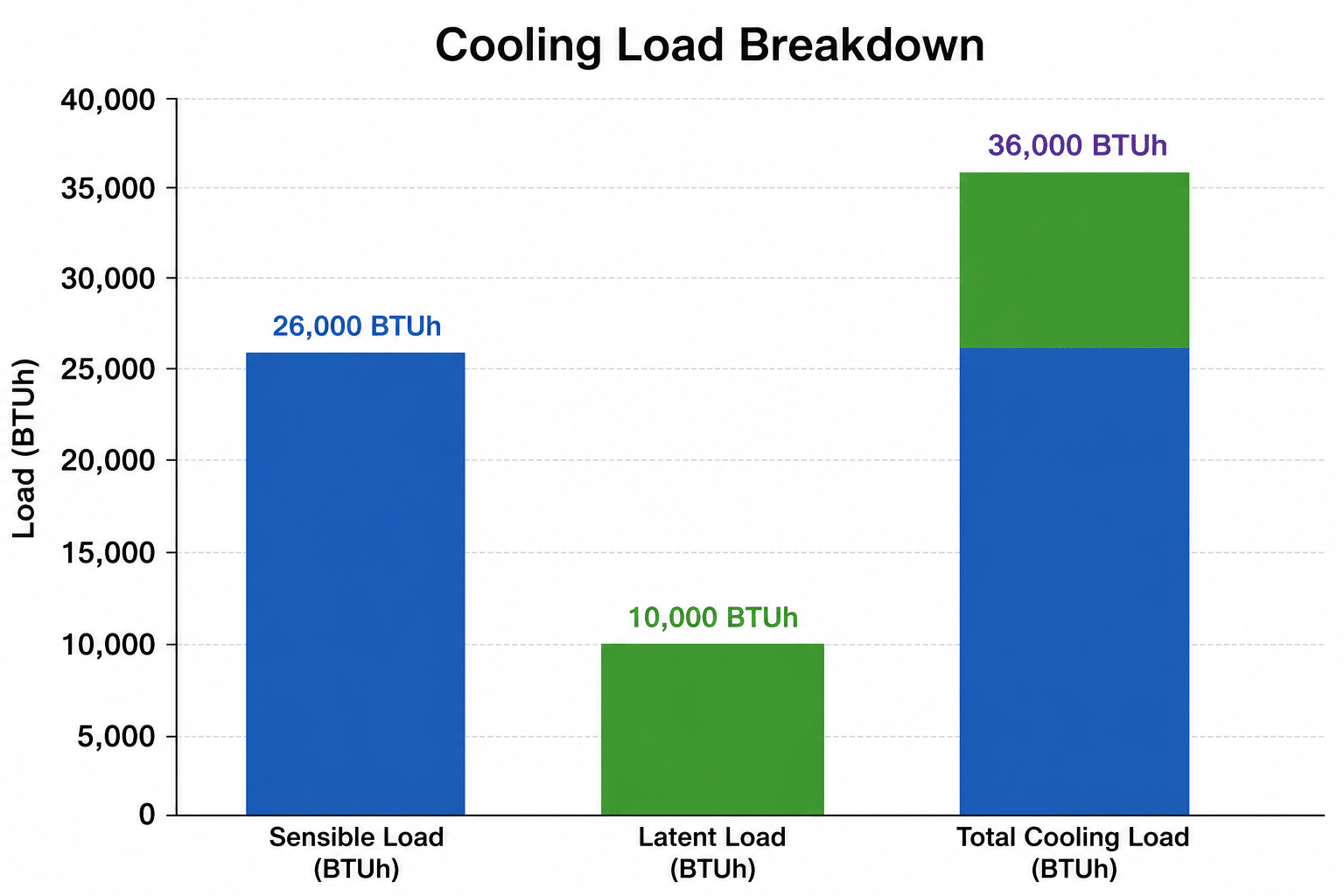
- Cooling equipment must meet the sensible and latent loads separately, not just the total tonnage.
- Manual S caps how far over the load you can size — generally within about 15% for single-stage cooling — specifically to protect dehumidification and efficiency.
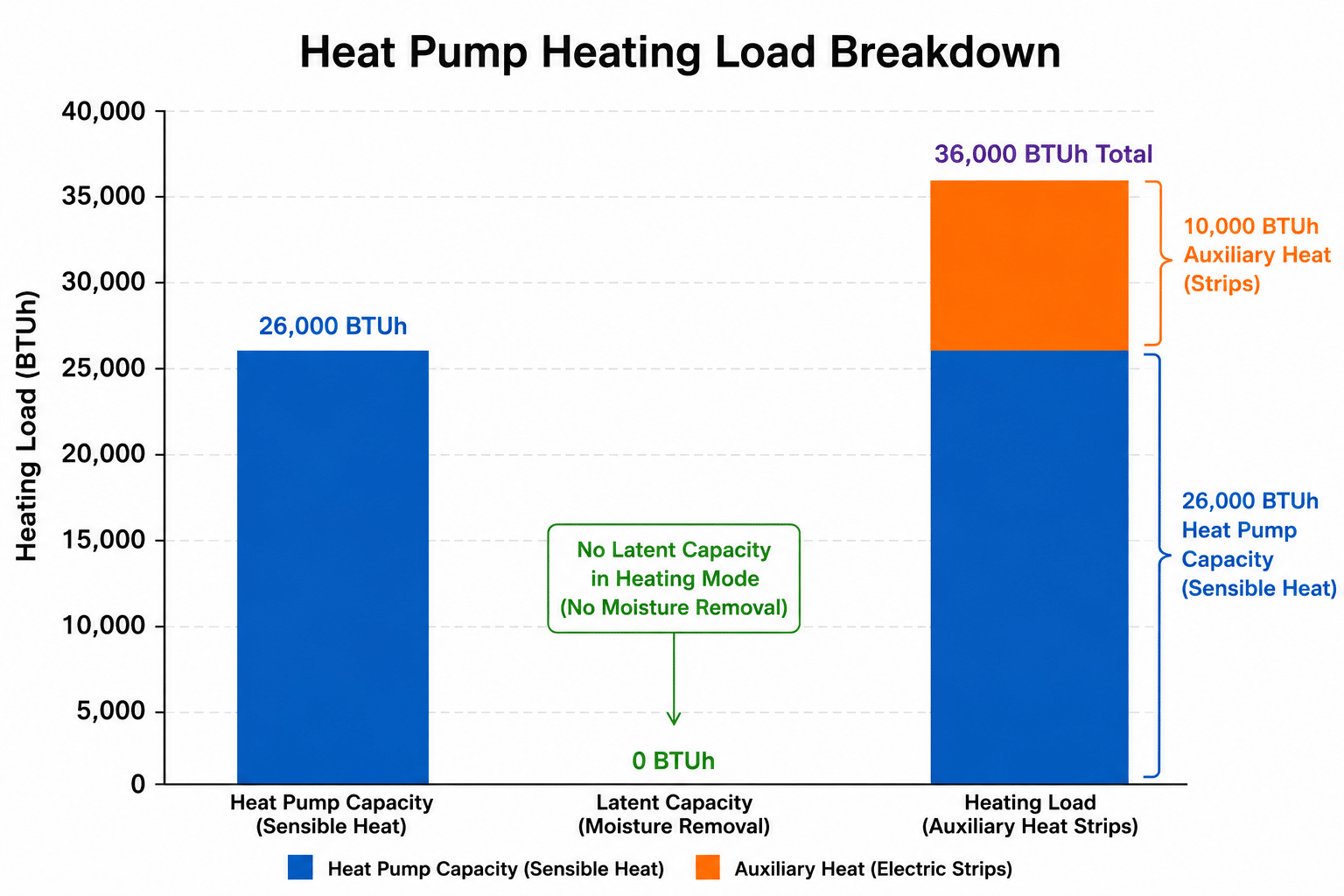
- For heat pumps, selection includes the balance point and how much auxiliary heat is actually needed.
What is Manual S equipment selection?
Manual J tells you how much heating and cooling a house needs. Manual S is how you choose the equipment that actually delivers it. That sounds like simple matching — pick the unit whose tonnage is closest to the load — but it isn’t, because a piece of equipment doesn’t have one fixed capacity. Its output rises and falls with the outdoor temperature, the indoor conditions, and the airflow across the coil. Manual S is the procedure for checking a specific model’s expanded performance data at your design conditions and confirming it meets the load there — not at the lab.
Why “3-ton load, 3-ton unit” is the wrong way to size
The tonnage stamped on a condenser is an AHRI rating measured at standard conditions — roughly 95°F outdoors and a fixed indoor setpoint. Your design day might be 100°F or hotter, and as the outdoor temperature climbs, a unit’s actual cooling output drops. So a “3-ton” unit that makes 36,000 BTU/h in the lab can deliver noticeably less on the worst afternoon of the year — exactly when the house needs the most. Matching nameplate tonnage to the load ignores this entirely.
How equipment is actually selected
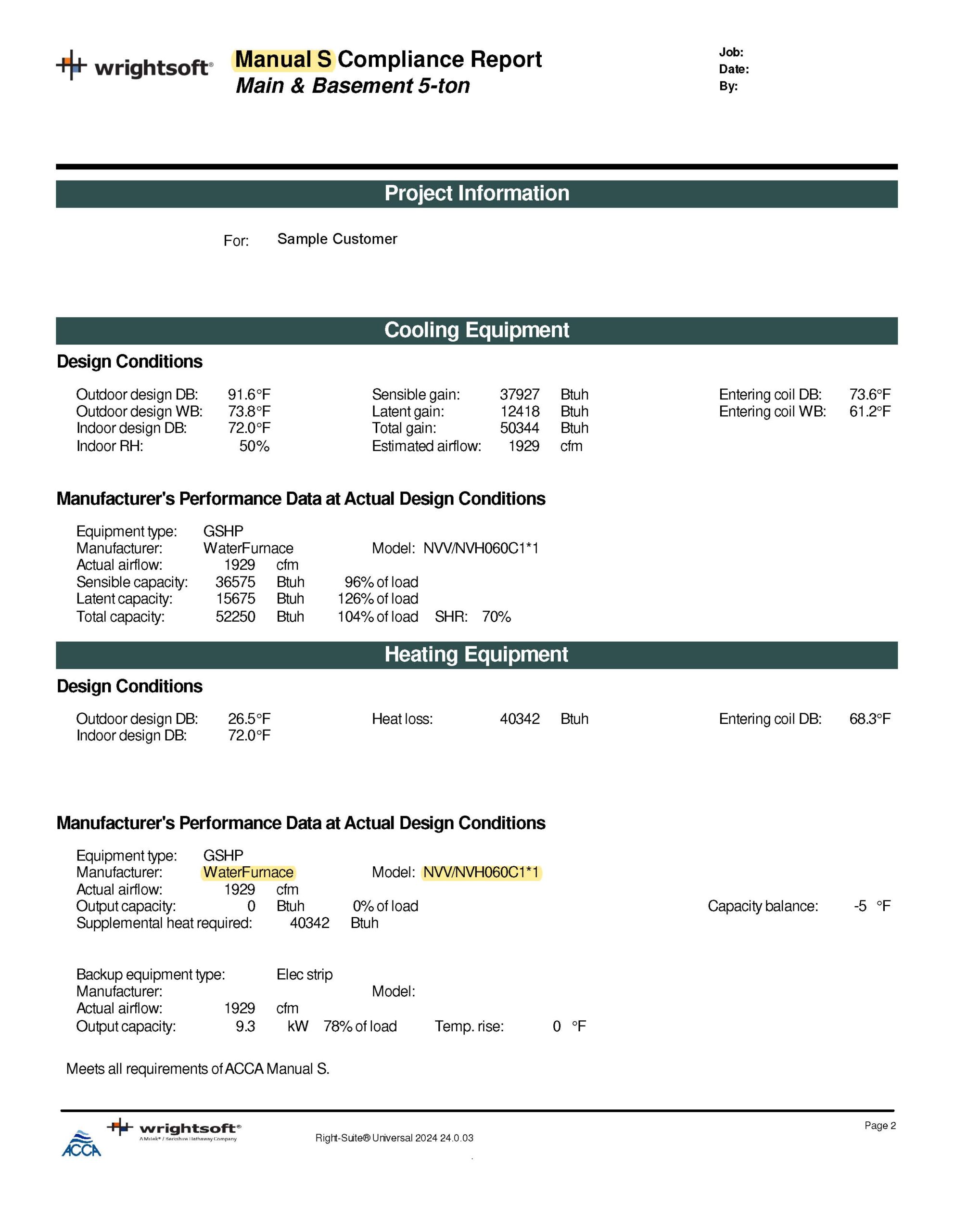
Real Manual S selection works from the manufacturer’s expanded performance tables — the grids that show a unit’s capacity at different outdoor temperatures, indoor conditions, and airflows. We take your Manual J loads, go into those tables at your design conditions, and confirm the candidate equipment meets the load there. Then we check the three capacities that actually matter:
| Capacity | What it has to cover |
|---|---|
| Total cooling | The whole cooling load at design conditions — within the Manual S oversizing limit, not wildly above it. |
| Sensible cooling | The temperature portion of the load — the part that brings the air down to setpoint. |
| Latent cooling | The moisture portion — critical in humid climates, and the part the nameplate never mentions. |
| Heating | The heating load at the winter design temperature, including heat-pump output at low temperatures. |
Why latent capacity is the part that gets missed
In a hot-humid climate, a unit can have plenty of total capacity and still fail, because not all of that capacity goes toward removing moisture. Two units with the same tonnage can have very different latent performance. Manual S checks the latent capacity against the latent load specifically, so the equipment you install can actually keep the house dry — not just cold. This is exactly why oversizing is capped: a too-large unit short-cycles and never runs long enough to dehumidify, so “bigger” makes the moisture problem worse, not better.
Heat pumps: balance point and auxiliary heat
Heat pumps add a step. A heat pump’s heating output falls as the outdoor temperature drops, so there’s a temperature — the balance point — below which it can no longer keep up with the heating load on its own. Manual S identifies that balance point and sizes the auxiliary heat to cover the gap, so you don’t end up with strip heat that’s either undersized for a cold snap or oversized enough to trip the electrical service.
How Manual S fits with Manual J and Manual D
Manual S is the middle step of three, and it can’t stand alone:
- Manual J — load calculation: the room-by-room loads that tell you how much capacity is needed.
- Manual S — equipment selection: matching real equipment to those loads at your design conditions.
- Manual D — duct design: sizing and drawing the ductwork to deliver the selected equipment’s airflow to every room.
Skip Manual S and you’re trusting a nameplate. Do it right and the equipment is matched to the house, the climate, and the worst day of the year — before anyone places an order.
Frequently asked questions
What is Manual S equipment selection?
It is the ACCA-standard method for selecting HVAC equipment whose real performance at your design conditions meets the heating and cooling loads calculated by a Manual J, checking total, sensible, and latent capacity.
Why isn’t matching tonnage to the load enough?
Because a unit’s nameplate tonnage is its rating at standard test conditions, and its real capacity falls as the outdoor temperature rises. Manual S checks the equipment’s actual output at your design conditions instead of trusting the rating.
What does Manual S check for cooling equipment?
Total cooling capacity within the allowed oversizing limit, sensible capacity for the temperature load, and latent capacity for the moisture load — all at the home’s design conditions.
How does Manual S handle heat pumps?
It finds the balance point, the temperature below which the heat pump can no longer meet the heating load alone, and sizes the auxiliary heat to cover the remaining load.
Do you provide Manual S nationwide?
Yes. Manual S is done remotely from your Manual J and the selected equipment data, for projects anywhere in the country.
Get equipment matched to the load, not the box
Manual S selection checked against real performance data at your design conditions, by someone who has done it for decades. Send us your project to start.
See pricing & start your project →