
Manual J Load Calculations · Nashville & Middle Tennessee
Nashville Manual J Load Calculations
Accurate, code-ready load calculations built for Middle Tennessee's Zone 3A climate — hot humid summers, genuinely cold winters, and the two-season sizing that Nashville demands.
- Climate zone: IECC Zone 3A — mixed-humid, genuine dual-season.
- Summer design temp: around 97°F with real humidity — significant sensible and latent cooling load.
- Winter design temp: around 13°F — one of the coldest winter design temperatures in Zone 3A.
- Why it matters: Nashville's 13°F winter is colder than Atlanta (22°F) and Birmingham (22°F) — the heating load is larger than most Zone 3A markets.
- We serve Nashville, Davidson County, and the surrounding Middle Tennessee metro — residential primary, select light commercial.
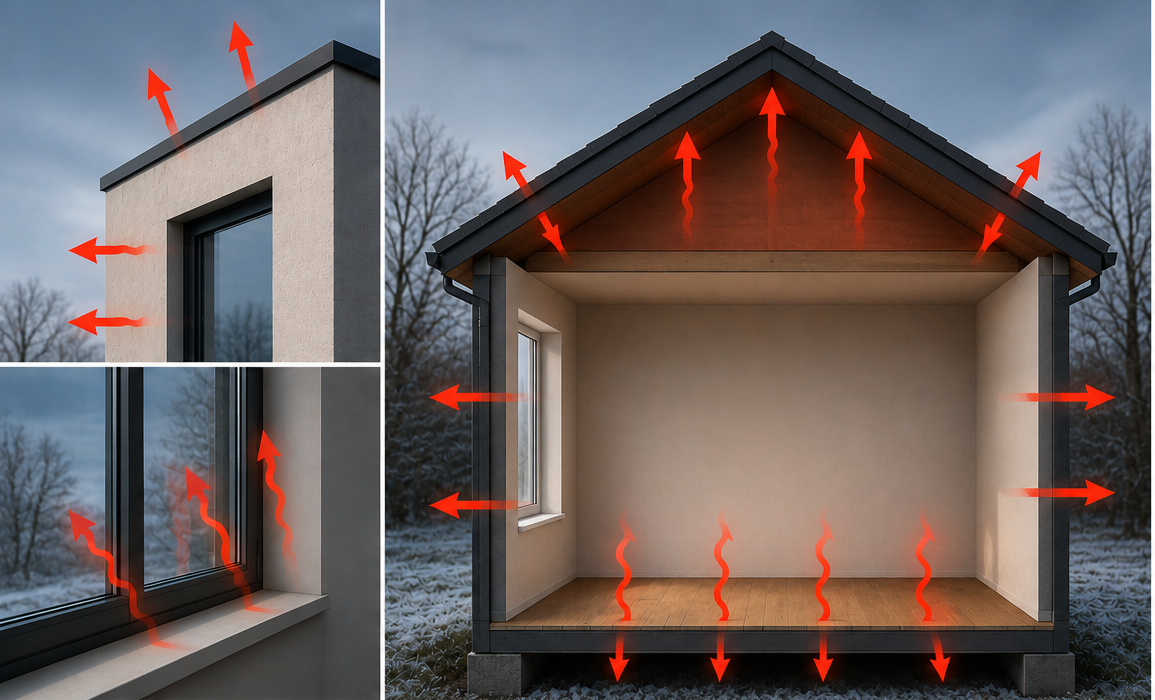
Why Nashville is the coldest city in Zone 3A
Nashville sits in IECC Climate Zone 3A — the same zone as Atlanta, Birmingham, and Dallas — but its winter design temperature of around 13°F makes it meaningfully colder than most of its zone peers. That distinction matters for HVAC sizing:
- The heating load is larger than expected. A 13°F design temperature drives a real heating load. Equipment sized for Atlanta's 22°F winter will be undersized in Nashville, particularly for heat pumps approaching their balance point on the coldest nights.
- Heat pump balance points need careful attention. Nashville winters push heat pumps harder than the zone average. Equipment selection has to account for the balance point — the outdoor temperature below which a heat pump can no longer meet the load without backup heat.
- The summer load is real and leads. Nashville's summer design temperature of around 97°F with Gulf-influenced humidity means a substantial cooling load. The latent component — moisture removal — matters alongside sensible cooling.
- Rapid weather swings are common. Middle Tennessee can swing from 85°F to 30°F in 48 hours when cold fronts move through. Equipment has to handle both extremes reliably across a long shoulder season.
- Explosive growth means new construction volume. Nashville is one of the fastest-growing metros in the Southeast. New construction here runs on permit timelines — a fast, accurate Manual J matters.
Nashville design specifications at a glance
| Nashville design specification | Technical requirement |
|---|---|
| IECC climate zone | 3A (Mixed-Humid) |
| Summer design temp | ~97°F with real humidity |
| Winter design temp | ~13°F — coldest in Zone 3A |
| Primary code | Tennessee State Energy Code (IECC-based) |
| Key challenge | Colder-than-average winter for the zone + real summer humidity + rapid swings |
What goes into a Nashville load calculation
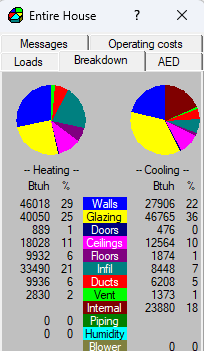
We run a full room-by-room ACCA Manual J using Middle Tennessee's actual design conditions — not a national average or a zone average. That means accounting for:
| Factor | Why it matters in Nashville |
|---|---|
| Winter design temperature | 13°F is a real heating load. Every wall, window, and ceiling assembly has to hold against that — sized accurately, not estimated. |
| Heat pump balance point | Nashville winters test heat pumps. The balance point calculation determines when backup heat engages — under-sizing that gets expensive fast. |
| Summer sensible + latent load | Gulf humidity reaches Middle Tennessee. The latent (moisture) load is calculated separately — short-cycling from oversizing leaves homes cool but clammy. |
| Window orientation & solar gain | Summer sun on south and west glass is a top cooling driver — each glazing counted by direction and spec. |
| Infiltration & envelope | Zone 3A minimum insulation levels checked against actual assemblies — what's in the plans, not a baseline assumption. |
The result is the honest heating, cooling, and dehumidification load your equipment should be built from — the foundation for selecting the right equipment and designing ducts that deliver it to every room.
Who we work with in the Nashville area
We provide Nashville and Davidson County load calculations for builders, HVAC contractors, architects, and homeowners — anyone who needs a clean, defensible number for permitting, equipment selection, or a comfort problem. Houses are our specialty; we also take on select light commercial such as small offices and recreation centers. We serve Nashville, Brentwood, Franklin, Murfreesboro, Hendersonville, Gallatin, Smyrna, La Vergne, Spring Hill, Columbia, and the broader Middle Tennessee metro — and we work nationwide.
How Nashville fits the bigger picture
A Nashville load calculation is one application of the same ACCA methodology we run everywhere — the climate inputs change, the rigor doesn't. For the full method, start with our Manual J load calculation overview, then see how heat gain and heat loss move through a home across both seasons. Working nearby? See our Birmingham and Atlanta pages for Zone 3A comparisons, or browse our full areas served.

Frequently asked questions
What climate zone is Nashville in for HVAC load calculations?
Nashville is in IECC Climate Zone 3A, classified as mixed-humid. It is a genuine dual-season climate with a summer design temperature around 97°F and a winter design temperature around 13°F — one of the coldest winter design temperatures in the entire Zone 3A category.
How is Nashville different from Atlanta for HVAC sizing?
Both cities are in IECC Zone 3A, but Nashville's winter design temperature of around 13°F is approximately 9°F colder than Atlanta's 22°F. That difference is significant for heating load sizing and heat pump balance point calculations. Nashville homeowners and contractors often underestimate the heating load because Zone 3A is typically framed as a cooling-dominated category.
Does Nashville need to size heating as carefully as cooling?
Yes. Nashville's 13°F winter design temperature produces a real heating load that must be calculated accurately. Heat pumps sized for cooling efficiency may not meet the heating load on the coldest nights without adequate backup. A Manual J accounts for both sides of the load with equal rigor.
Why does humidity matter for Nashville HVAC sizing?
Gulf moisture reaches Middle Tennessee, particularly in summer. The latent cooling load — moisture removal — is real and must be calculated separately from sensible cooling. An oversized system that short-cycles cools the air quickly but never runs long enough to remove humidity, leaving the home feeling clammy even at the set temperature.
Do you serve all of the Nashville metro?
Yes. We provide residential load calculations across Nashville, Davidson County, Brentwood, Franklin, Murfreesboro, Hendersonville, Gallatin, Smyrna, La Vergne, Spring Hill, Columbia, and the broader Middle Tennessee metro, plus select light commercial, and we work nationwide.
An accurate, code-ready ACCA Manual J using Middle Tennessee's real design conditions — sized for the 97°F summer load and the 13°F winter that makes Nashville the coldest Zone 3A market we serve.
See pricing & start your load calculation →