
Manual J Load Calculations - Phoenix, Scottsdale & the Valley of the Sun
Phoenix Scottsdale Manual J Load Calculations
Accurate, code-ready load calculations built for Zone 2B's extreme desert climate - 110F summers, low humidity, massive solar gain, and attic temperatures that make duct design a critical part of every project.
A Phoenix Manual J load calculation determines your home's true heating and cooling loads using the Valley of the Sun's actual desert design conditions - IECC Climate Zone 2B, hot and dry, with a sensible cooling load that is among the largest in the country. At 110F summer design temperature with low humidity, Phoenix's load is almost entirely sensible heat gain - solar radiation through glass, conduction through walls and roof, and attic heat that drives duct losses to levels that don't exist in any other market we serve. Getting this right requires a zone 2b load calculation built specifically for Phoenix conditions - not generic Southwest averages.
Phoenix / Scottsdale Design Facts
- Climate zone: IECC Zone 2B - hot-dry, cooling-dominated
- Summer design temp: 110F dry-bulb - among the highest in the US
- Winter design temp: 34F - mild but real heating load
- Low humidity - sensible load dominates, latent load minimal
- Attic temps reach 150-160F - duct design is critical
- We serve Phoenix, Scottsdale, Tempe, Mesa, Chandler, Gilbert, Glendale, Peoria, Surprise, Goodyear, Buckeye, Queen Creek, and the greater Valley of the Sun
Why Phoenix is the most demanding sensible load market in the country
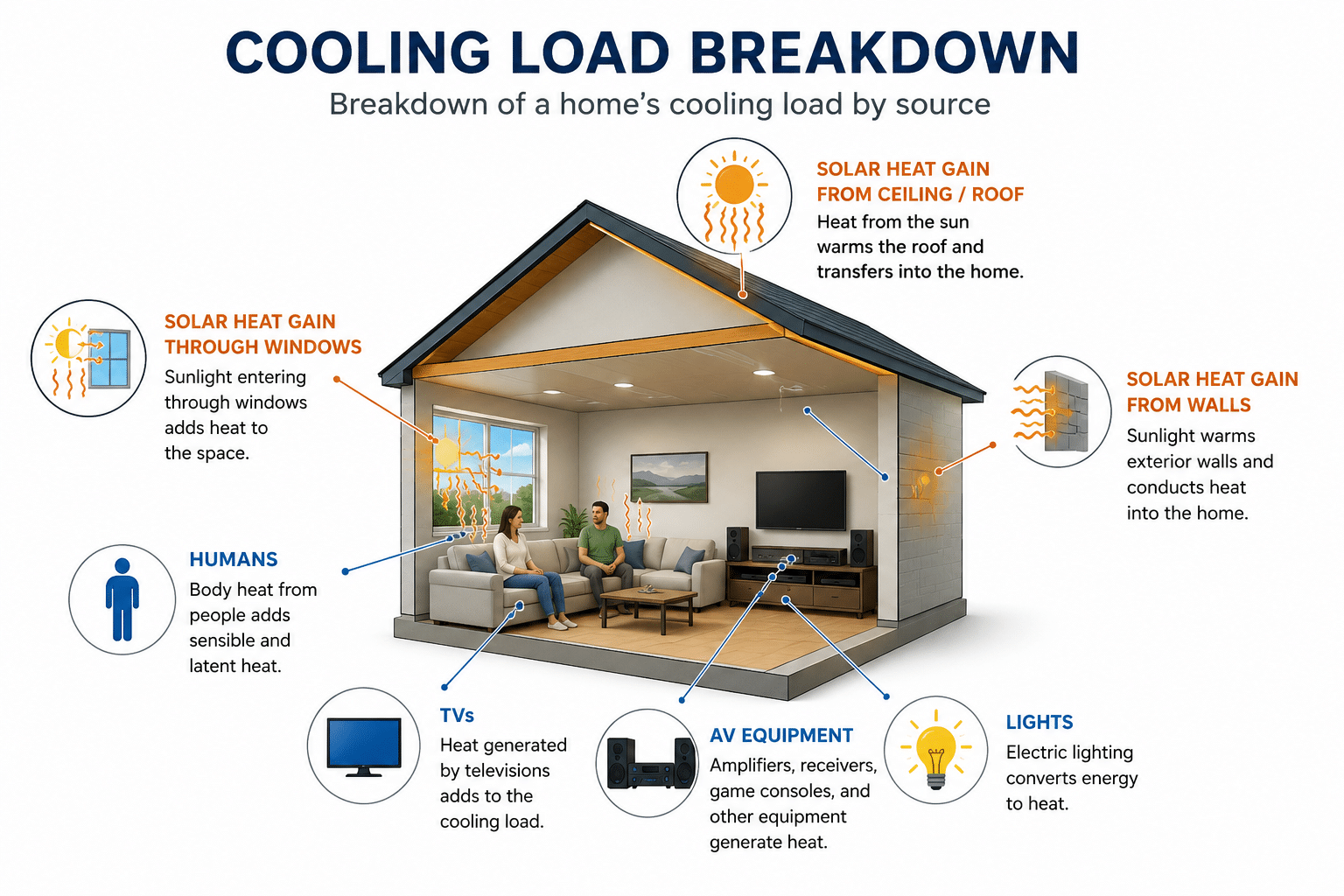
Phoenix's Zone 2B classification means hot and dry - and that combination produces a cooling load profile unlike any humid climate market. With virtually no latent load, every BTU of the cooling requirement is sensible heat gain. Solar radiation through west and south-facing glass is extreme. Conduction through walls and roofs exposed to 110F outdoor temperatures drives the load continuously. And the desert sun heats dark roofing surfaces to temperatures that make attic air a significant heat source in its own right.
The result is a sensible cooling load that regularly requires 5-ton or larger systems in homes that would need 3 tons in Atlanta or Charlotte. A rule-of-thumb estimate based on square footage will produce a number that is meaningfully wrong in Phoenix's extreme conditions. Understanding the complete picture of heat gain sources is where accurate Phoenix hvac sizing starts.
Phoenix attics routinely reach 150-160F in summer. Ducts running through unconditioned attic space lose significant cooling capacity before air reaches the living space - making Manual D duct design as important as the load calculation itself in desert construction.
The duct design problem that most Phoenix projects get wrong
In most of the country, duct losses are a secondary concern. In Phoenix, they are a primary sizing factor. When attic air reaches 150 to 160F and supply ducts run through that attic unconditioned, the temperature difference between the duct interior and the surrounding air drives heat gain into the duct that can reduce delivered cooling capacity by 20 to 30 percent.
A system sized correctly for the house load but with poorly sized or poorly insulated ductwork will underperform every summer afternoon in Phoenix - the time of day when demand is highest and grid stress is greatest. Manual D duct design accounts for duct heat gain explicitly, sizing trunks, branches, and supplies to deliver the calculated airflow to each room despite the extreme thermal environment of a Phoenix attic.
Phoenix and Scottsdale design conditions
| Parameter | Value | What it means for sizing |
|---|---|---|
| Summer dry-bulb | 110F | Among the highest in the US - massive sensible load |
| Summer wet-bulb | 71F | Low humidity - sensible load dominates, latent minimal |
| Winter design temp | 34F | Mild but real - heating load must be checked |
| IECC climate zone | 2B | Hot-dry; Arizona Energy Code applies |
| Applicable code | Arizona Energy Code (2018 IECC with amendments) | Manual J required for permit compliance |
What we deliver
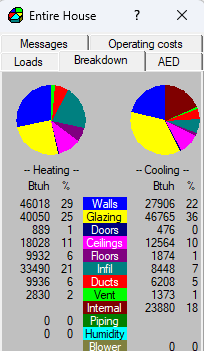
Every Phoenix and Scottsdale project includes a complete Manual J load report with room-by-room results, total cooling and heating loads calculated at actual desert design conditions, and the sensible/latent breakdown specific to Zone 2B. Manual S equipment selection matches the load to specific equipment rated for high ambient temperature operation - a critical check in Phoenix where outdoor unit performance degrades at extreme temperatures. Manual D duct design sizes every trunk, branch, and supply accounting for the duct heat gain that Phoenix attics impose.
Reports are permit-ready for submission to Maricopa County, the City of Phoenix, Scottsdale, Mesa, Chandler, Gilbert, and surrounding jurisdictions. We work remotely - you send plans, we return a permit-ready PDF. See our full areas served page for all markets we cover nationwide.
Frequently Asked Questions
Do I need a Manual J for a permit in Phoenix or Scottsdale?
Yes. The Arizona Energy Code requires a Manual J load calculation for new construction and HVAC replacements requiring a permit. The calculation must use Phoenix's actual desert design conditions - including the 110F summer design temperature and attic heat gain factors that generic calculators routinely miss.
Why is Phoenix's load calculation so different from other hot climates?
Phoenix is Zone 2B hot-dry - unlike Houston, Miami, or Atlanta which are Zone 2A or 3A hot-humid. The absence of humidity means Phoenix's cooling load is almost entirely sensible heat gain, not latent moisture removal. This produces a different equipment selection profile - Phoenix needs high sensible heat ratio equipment rated for extreme ambient temperatures, not the high latent capacity equipment that humid markets require.
Why does duct design matter so much in Phoenix?
Phoenix attics routinely reach 150 to 160F in summer. Supply ducts running through unconditioned attic space lose significant cooling capacity to heat gain before air reaches the living space - reducing delivered capacity by 20 to 30 percent in worst-case conditions. Manual D duct design accounts for this explicitly, sizing ducts and specifying insulation levels that limit heat gain to acceptable levels.
How long does a Phoenix load calculation take?
Most residential projects are completed within 2 to 3 business days of receiving your plans. We work remotely - you send floor plans and construction details, we model the home in Wrightsoft using Phoenix's actual desert design conditions and return a permit-ready PDF report.
What areas do you serve around Phoenix and Scottsdale?
We serve the entire Valley of the Sun including Scottsdale, Tempe, Mesa, Chandler, Gilbert, Glendale, Peoria, Surprise, Goodyear, Buckeye, Queen Creek, and surrounding Maricopa County communities. All work is done remotely with no site visit required.
Get a load calculation built for Phoenix's desert climate
A complete Manual J, Manual S, and Manual D design package sized to your actual house and the Valley of the Sun's extreme design conditions.
See pricing & start your project ->