
Manual J Load Calculations - Tampa Bay & Greater Hillsborough County
Tampa FL Manual J Load Calculations
Accurate, code-ready load calculations built for Tampa Bay's Zone 2A Gulf Coast climate - high humidity, intense afternoon thunderstorms, and one of Florida's fastest-growing suburban construction markets.
A Tampa Manual J load calculation determines your home's true heating and cooling loads using the Tampa Bay area's actual design conditions - IECC Climate Zone 2A, hot and humid, with a Gulf Coast moisture load that drives substantial latent demand throughout the cooling season. Tampa sits at the convergence of Gulf of Mexico and Atlantic sea breezes that feed the most active afternoon thunderstorm pattern in the continental United States - and that persistent humidity means dehumidification is a primary sizing consideration, not a secondary one. An accurate Tampa hvac load calculation accounts for this from the start.
Tampa Design Facts
- Climate zone: IECC Zone 2A - hot-humid, dual-season
- Summer design temp: 92F dry-bulb / 78F wet-bulb
- Winter design temp: 36F - real heating load, especially inland
- High latent load - Gulf moisture drives year-round humidity
- Lightning capital of the US - storm-driven infiltration matters
- We serve Tampa, St. Petersburg, Clearwater, Brandon, Riverview, Wesley Chapel, Land O Lakes, Lutz, Valrico, Plant City, Lakeland, and greater Hillsborough, Pasco, and Pinellas counties
Why Tampa's humidity load is different from Orlando or Miami
Tampa, Orlando, and Miami all sit in Zone 2A, but their load profiles diverge in ways that matter for equipment selection. Miami is coastal Zone 1A with extreme latent load. Orlando is inland with afternoon lake-effect storms. Tampa sits on Tampa Bay with Gulf of Mexico moisture on one side and the Atlantic sea breeze on the other - creating a convergence zone that produces more afternoon thunderstorm hours than virtually any other US city.
That storm activity keeps ground-level humidity elevated throughout the cooling season. Even on days when temperatures are moderate, the wet-bulb stays high - which means the latent load is present and dehumidification demand is real. An oversized system that short-cycles in Tampa's climate is particularly problematic: it cools fast, shuts off before removing adequate moisture, and leaves humidity behind. Understanding the complete picture of heat gain and moisture load is essential for Tampa hvac sizing.
Tampa receives more lightning strikes than any other metro area in the US. The afternoon thunderstorm pattern that drives this statistic also keeps ground-level humidity persistently high - making latent load control a year-round sizing consideration.

One of Florida's fastest-growing construction markets
Greater Tampa is adding population faster than almost any metro area in the country. Hillsborough County, Pasco County, and Polk County are all seeing substantial new residential construction - from master-planned communities in Wesley Chapel and Land O Lakes to infill development in Tampa proper and waterfront construction along the bay.
That growth means thousands of new permits annually, each requiring an accurate load calculation under the Florida Building Code. Builders, contractors, and homeowners across the Tampa Bay area depend on permit-ready Manual J reports that use actual Tampa design conditions - not statewide Florida averages that can differ meaningfully from local wet-bulb and dry-bulb conditions.
Tampa design conditions
| Parameter | Value | What it means for sizing |
|---|---|---|
| Summer dry-bulb | 92F | Full Zone 2A cooling load |
| Summer wet-bulb | 78F | High Gulf Coast latent load - dehumidification essential |
| Winter design temp | 36F | Real heating load - heat pump balance point matters |
| IECC climate zone | 2A | Hot-humid; Florida Building Code applies |
| Applicable code | Florida Building Code, 8th Edition | Manual J required for permit compliance |
What we deliver
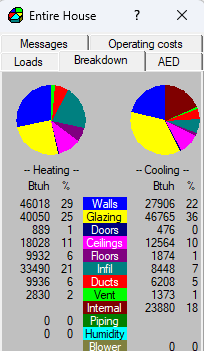
Every Tampa project includes a complete Manual J load report with room-by-room results, total heating and cooling loads, and the latent load breakdown that Zone 2A Gulf Coast conditions require. Manual S equipment selection matches the load to specific equipment - checking both sensible and latent capacity to ensure the system dehumidifies adequately in Tampa's humid conditions. Manual D duct design sizes every trunk, branch, and supply to deliver the right airflow to each room.
Reports are permit-ready for submission to Hillsborough County, Pinellas County, Pasco County, Polk County, and surrounding jurisdictions. We work remotely - you send plans, we return a permit-ready PDF. See our full areas served page for all markets we cover nationwide.
Frequently Asked Questions
Do I need a Manual J for a permit in Tampa FL?
Yes. The Florida Building Code, 8th Edition requires a Manual J load calculation for new construction and HVAC replacements requiring a permit. The calculation must use Tampa's actual design conditions - including the wet-bulb temperature that captures Gulf Coast humidity levels, not statewide averages.
How is Tampa's climate different from Orlando or Miami for HVAC sizing?
Tampa's Gulf Coast position creates a persistent latent load driven by Tampa Bay and Gulf of Mexico moisture - different from Orlando's inland lake-effect pattern and Miami's Zone 1A coastal conditions. Tampa's afternoon thunderstorm convergence zone keeps ground-level humidity elevated even on days when temperatures are moderate, making latent load control a year-round sizing consideration.
Does Tampa need a heating load calculation?
Yes. Tampa's 36F winter design temperature means heating loads are real, particularly in inland Hillsborough and Pasco counties where winter cold fronts produce temperatures lower than coastal areas. Heat pumps serving Tampa homes need a balance point check, and the heating load must be calculated accurately rather than assumed to be negligible.
How long does a Tampa load calculation take?
Most residential projects are completed within 2 to 3 business days of receiving your plans. We work remotely - you send floor plans and construction details, we model the home in Wrightsoft and return a permit-ready PDF report.
What areas do you serve around Tampa FL?
We serve the entire Tampa Bay metro including St. Petersburg, Clearwater, Brandon, Riverview, Wesley Chapel, Land O Lakes, Lutz, Valrico, Plant City, and Lakeland - covering Hillsborough, Pinellas, Pasco, and Polk counties. All work is done remotely with no site visit required.
Get a load calculation built for Tampa Bay's climate
A complete Manual J, Manual S, and Manual D design package sized to your actual house and Tampa's Gulf Coast design conditions.
See pricing & start your project ->