
Fort Lauderdale Manual J Load Calculations
An oversized air conditioner in Fort Lauderdale doesn’t just waste energy — it leaves the house humid. In a coastal South Florida climate where the air carries moisture every day of the year, a system that short-cycles never runs long enough to remove it. The result is a home that feels cool but clammy, and a comfort problem that more tonnage only makes worse.
A proper Manual J load calculation determines exactly what the home needs — not what’s quick to quote. We build every Fort Lauderdale calculation from your actual plans: room dimensions, window specs, orientation, insulation values, and the real design conditions for coastal Broward. The result is a load number your contractor can trust and a permit desk will accept.

In coastal Broward, moisture removal is the critical part of the sizing job. A system running long, steady cycles dehumidifies properly. An oversized one that short-cycles never does.
Manual J
Room-by-room load calculation using Broward’s actual design conditions. The foundation every equipment and duct decision is built on.
Learn about Manual J →Manual S
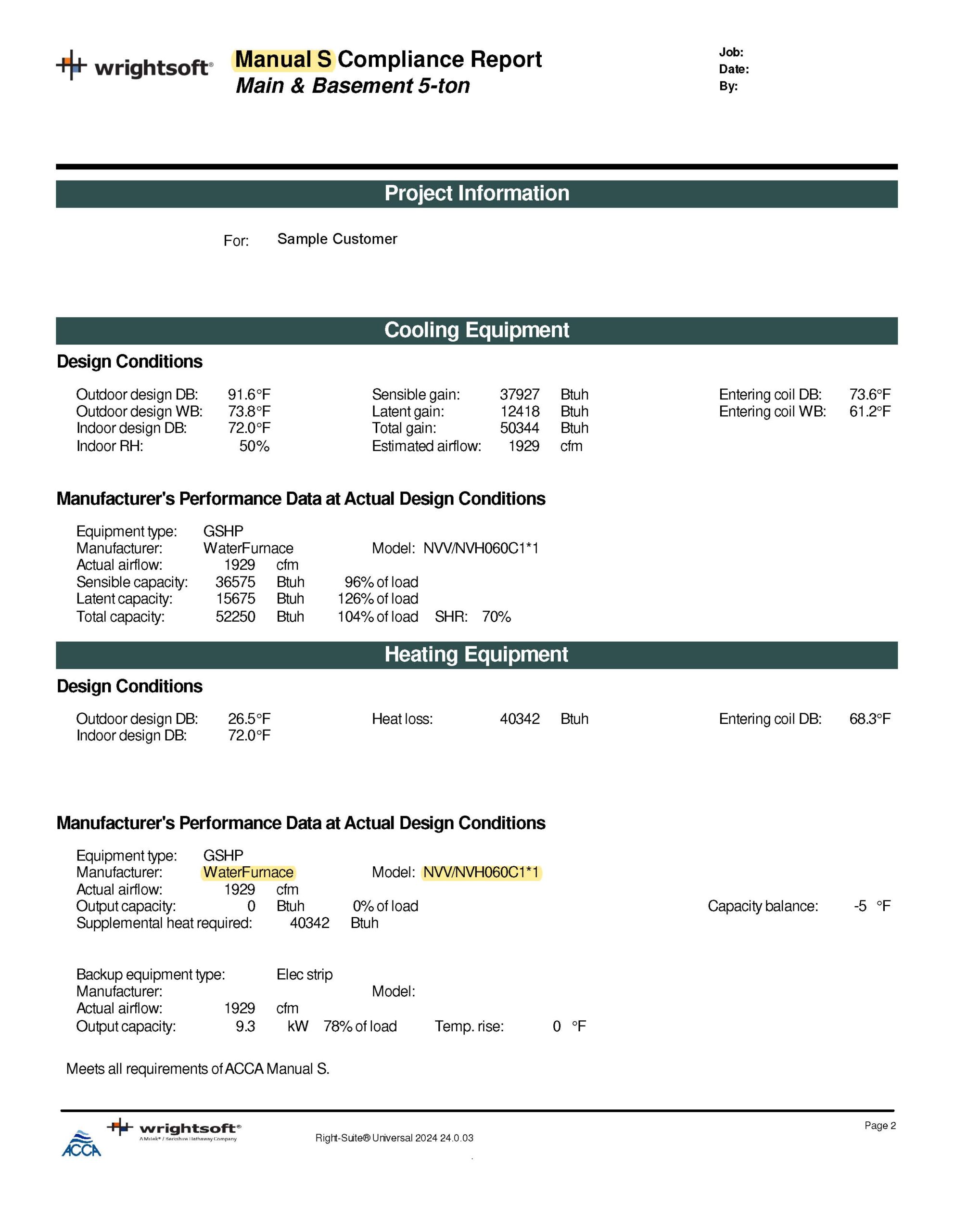
Equipment selected from real manufacturer performance data — total capacity, sensible capacity, and latent capacity all checked separately for South Florida.
Learn about Manual S →Manual D
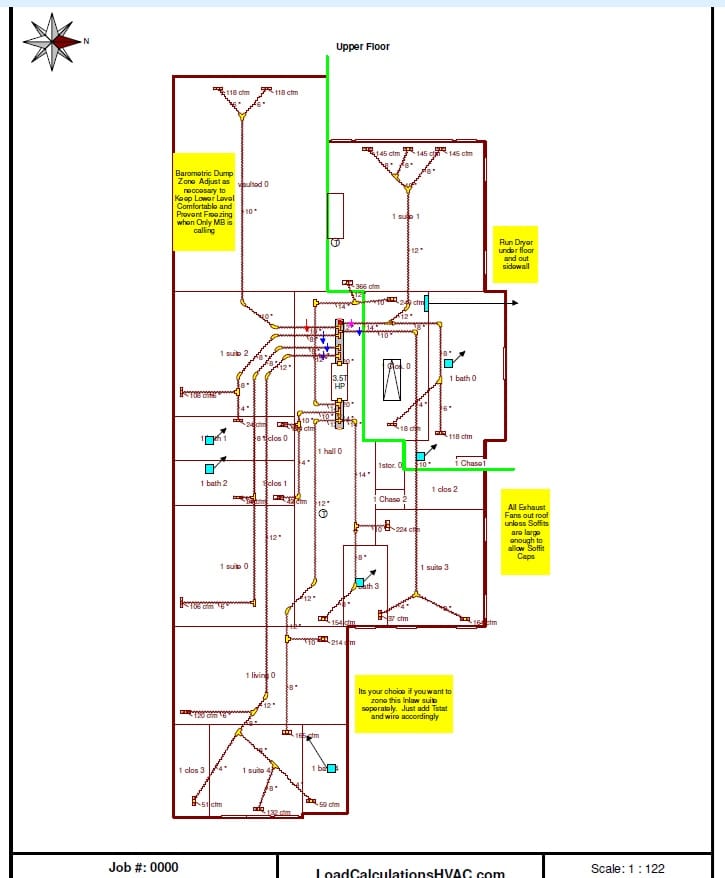
Duct design sized to deliver the calculated airflow to every room — critical in the multi-story and waterfront layouts common across Fort Lauderdale.
Learn about Manual D →Why Fort Lauderdale sizing is its own discipline
Fort Lauderdale sits at the southern end of IECC’s most demanding climate designation — very hot and humid, cooling-dominated year-round. Unlike most of the country, the heating load is negligible. The entire sizing job is about cooling and dehumidification, and getting both right in the same system.
What makes Broward County distinct from the rest of South Florida is the coastal position. The Atlantic on the east, 165 miles of inland waterways threading through the city, and constant marine air create a latent load that never lets up. The air carries moisture in January the same way it does in August. A hot and humid climate requires careful latent load accounting — it’s not optional, and it’s not captured by square footage.
The oversizing trap is real and it’s coastal-specific. An oversized system cools fast, hits the thermostat setpoint, and shuts off. In a dry climate that’s survivable. In Fort Lauderdale it means the dehumidification cycle never completes, the home stays clammy, and mold finds the corners. More tonnage makes it worse, not better.
The coastal sizing rule: in Fort Lauderdale you’re not just sizing for temperature. You’re sizing for temperature and moisture removal simultaneously, in a home where the air conditioner is the only thing standing between the interior and the Atlantic’s humidity. Both sides of that equation require separate calculation — and that’s what Manual J delivers.
The building stock that makes Fort Lauderdale unique
Greater Fort Lauderdale has one of the most varied residential profiles in Florida. Waterfront single-family homes along the intracoastal and New River, mid-century ranches in older neighborhoods like Victoria Park and Coral Ridge, newer two-story construction in Weston and Parkland, and high-rise condos along the beach — each presents a completely different load and a different duct challenge.
Waterfront homes often have large water-facing glass, open floor plans, and exposure on multiple sides — all of which drive the cooling load well above what the square footage suggests. Multi-story homes have the additional challenge of delivering conditioned, dehumidified air evenly to upper floors against stack effect and pressure differences. In these layouts, Manual D duct design matters as much as the load calculation that feeds it.
What goes into a Fort Lauderdale load calculation
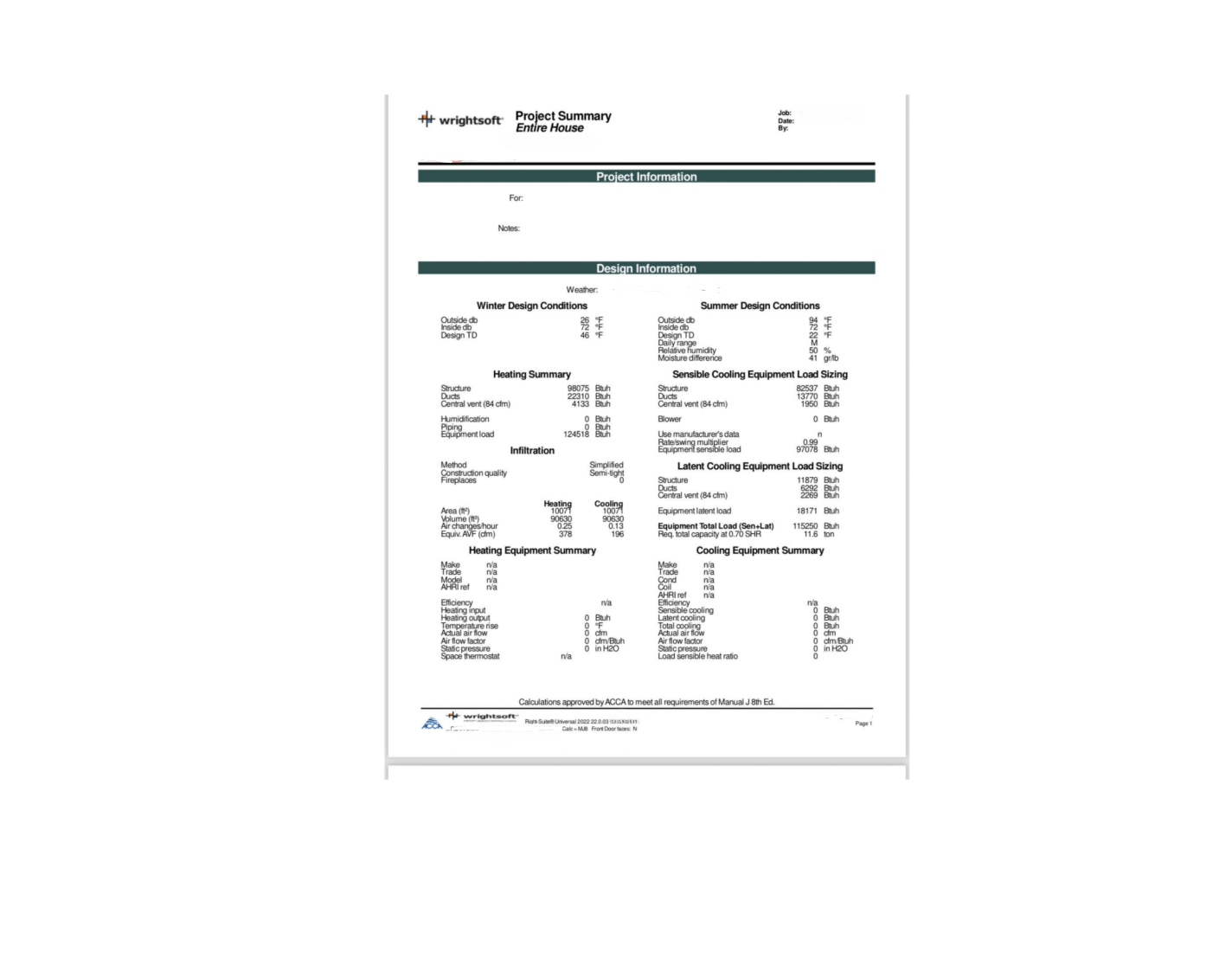
We run a full room-by-room ACCA Manual J using coastal Broward’s actual design conditions in WrightSoft Right-Suite Universal. Every factor that drives the cooling and dehumidification load is accounted for separately:
| Factor | Why it matters in Fort Lauderdale |
|---|---|
| Latent (moisture) load | Calculated separately from sensible load — the most important number in a coastal South Florida home. Drives equipment selection and runtime requirements. |
| Solar gain through glazing | Water-facing and east/west glass is a major cooling driver. Each window counted by orientation, size, and SHGC specification. |
| Summer design conditions | Sized to Broward County’s real peak — ~91°F dry-bulb with high humidity, not a national average. |
| Multi-story layout | Stack effect and floor-to-floor pressure differences affect both the load and the duct design needed to address it. |
| Infiltration & ventilation | Hot, humid coastal air entering the home is a continuous latent load that must be conditioned. Tight or leaky construction changes the number significantly. |
| Florida Building Code | 8th Edition requirements including Manual J for permit submittal and the 2026 A2L refrigerant transition that makes accurate sizing a mechanical necessity. |
Why the 2026 A2L refrigerant transition makes accurate sizing non-negotiable
- R-454B and R-32 systems have tighter charge limits based on room size
- Sensor accuracy depends on correctly sized equipment running at design conditions
- Oversized A2L systems in coastal environments face corrosion and sensor failure risks
- Florida Building Code now requires Manual J for all new systems using A2L refrigerants
- An accurate load number protects the installation against code and warranty challenges
- See our 2026 HVAC code changes overview for full details
Understanding heat gain in a Fort Lauderdale home
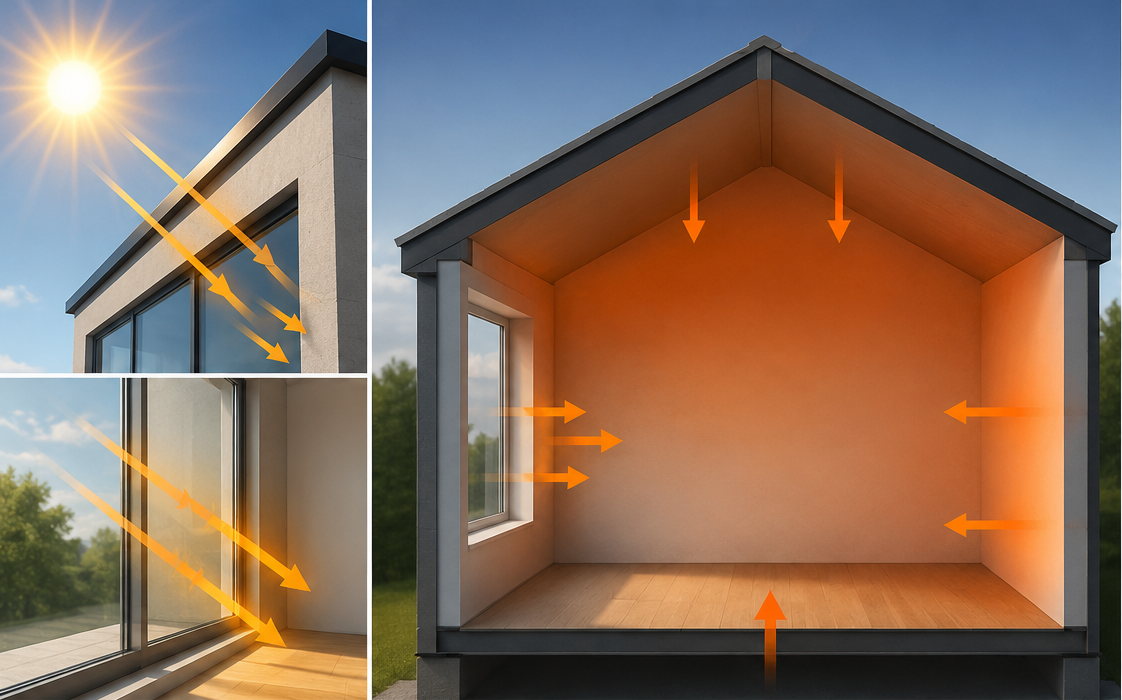
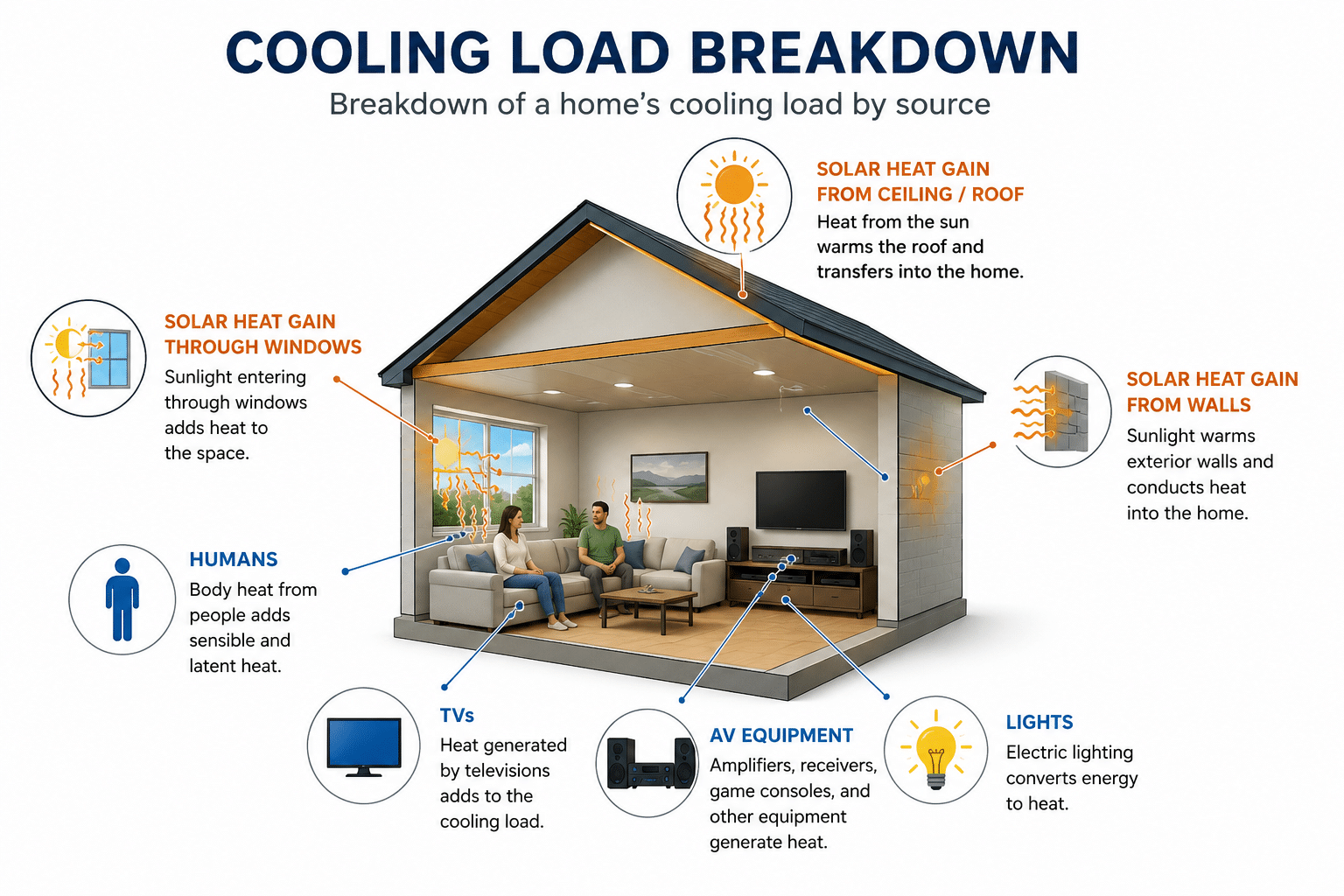
Understanding where the cooling load comes from is the first step to sizing correctly. In Fort Lauderdale, the major contributors are:
Solar gain through glass is typically the largest single driver. South Florida’s intense sun combined with water-facing orientations and large windows pushes the solar component of the cooling load well above what most contractors expect. Low-SHGC glass helps but doesn’t eliminate the problem — the calculation has to account for each glazing’s actual spec and orientation.
The latent load from outdoor air is constant and coastal-specific. Every time a door opens, every cfm of ventilation air, every infiltration path brings in Atlantic humidity that the air conditioner must remove. This is a load that runs year-round regardless of season, and it’s the reason a correctly sized system in Fort Lauderdale runs longer cycles than a correctly sized system in Phoenix.
Conduction through the envelope matters less in a mild-winter climate but still contributes to the summer peak. Attic insulation, wall assemblies, and roof color all factor into the calculation. See our heat gain and heat loss overview for a full breakdown of how each path is calculated.
Sensible vs. latent load — why it matters for your equipment choice
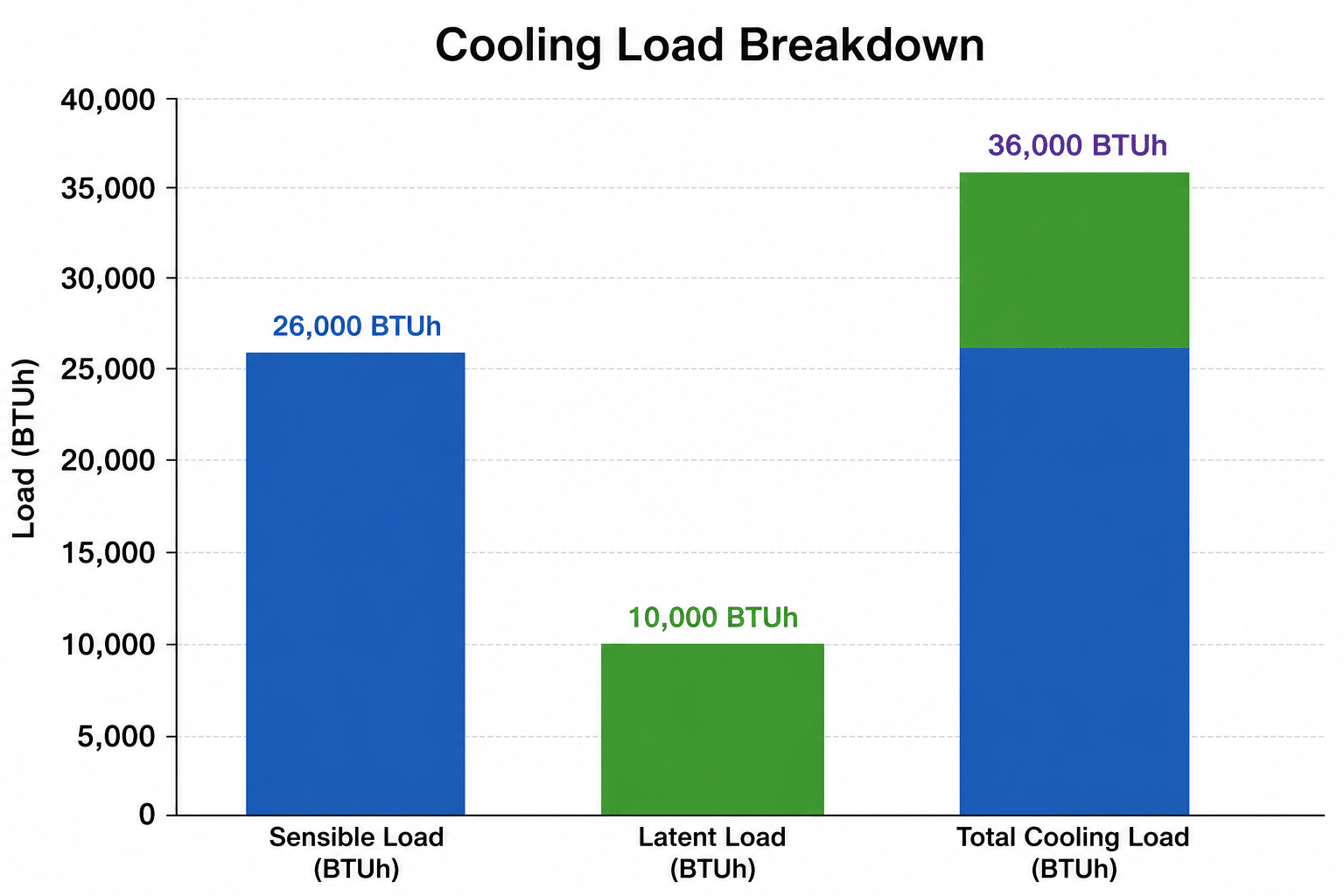
Most equipment is rated by total BTU capacity. But total BTUs are split between sensible cooling (lowering the temperature) and latent cooling (removing moisture). In a coastal South Florida climate, the latent portion is large — sometimes 40% or more of the total load.
This is where Manual S equipment selection earns its value. A unit that matches the total BTU load can still leave a Fort Lauderdale home humid if its sensible heat ratio doesn’t match what the home actually needs. Manual S checks all three numbers — total, sensible, and latent — at the real design conditions for coastal Broward, not at standard rating conditions.
Variable-speed systems complicate this further. See our overview of variable-speed vs. single-stage compressors for how modulating capacity interacts with latent load in a humid climate.
Fort Lauderdale area communities we serve
We provide residential Manual J load calculations, Manual S equipment selection, and Manual D duct design across Fort Lauderdale and all of Broward County — remotely, with no site visit required. Plans sent, reports returned in 24–48 hours.
We also serve Miami-Dade and work nationwide. Every project uses the same ACCA methodology — the climate inputs change, the rigor doesn’t.
Who we work with in Broward County
HVAC contractors use our calculations to pull permits, select equipment with confidence, and eliminate callbacks from comfort complaints. A permit-ready Manual J, S, and D package means fewer questions at the inspection desk and a defensible record if the homeowner has concerns later.
Builders and architects need the load data early — before mechanical rough-in, before equipment specs are committed to, before the plans go to the GC. We coordinate with the mechanical drawings so the system that gets installed matches what the house actually needs.
Homeowners getting a new system or investigating a comfort problem get an independent answer before a contractor quotes them equipment. Knowing the right size before the conversation starts is worth more than the cost of the calculation.
Frequently asked questions
Yes. The Florida Building Code, 8th Edition requires a Manual J load calculation for new HVAC installations and replacements requiring a permit throughout Broward County. The calculation must use actual design conditions and construction details for the specific project — not a rule-of-thumb estimate. With the 2026 A2L refrigerant transition, accurate sizing is now also a mechanical requirement for system safety and charge compliance.
An oversized system cools the air temperature quickly and shuts off before completing the dehumidification cycle. In a dry climate that’s manageable. In Fort Lauderdale’s coastal humidity it means the home stays clammy, mold finds damp surfaces, and the homeowner is uncomfortable even though the thermostat says the right temperature. Adding more tonnage makes the problem worse, not better. The fix is right-sizing to begin with.
Fort Lauderdale shares South Florida’s hot-humid climate with Miami, but its coastal Broward position, 165 miles of inland waterways, and building stock of waterfront homes, multi-story houses, and condos give it a distinct sizing profile. The latent load from marine humidity is constant and high, water-facing glass drives solar gain on multiple elevations, and multi-story layouts require careful duct design to deliver conditioned air to every floor.
Many Fort Lauderdale homes are multi-story or have complex waterfront layouts. Even a correctly sized system underperforms if the ductwork cannot deliver conditioned, dehumidified air to upper floors and far rooms. A correct Manual J load calculation tells you what each room needs — a proper Manual D duct design ensures the system actually delivers it. Both are necessary in these layouts.
Most residential projects are completed within 24 to 48 hours of receiving your plans and project information. We work remotely — you send floor plans, window specs, insulation details, and orientation, we model the home in WrightSoft and return a permit-ready PDF report. No site visit required.
Manual J load calculations start at $0.14 per square foot with a $350 minimum. Full Manual J, S, and D design packages start at $990. See our pricing page for the complete rate schedule including add-ons for ERV selection and duct design.
Yes. We provide residential load calculations and duct design across Fort Lauderdale, Hollywood, Pompano Beach, Coral Springs, Sunrise, Plantation, Davie, Weston, Pembroke Pines, Boca Raton, and all of Broward County. We also serve Miami-Dade and work nationwide. All work is done remotely with no site visit required.
Get a Fort Lauderdale load calculation built for the Broward coast.
Accurate, permit-ready Manual J, S, and D reports using real coastal Broward design conditions. For contractors, builders, and homeowners across Fort Lauderdale and Broward County.
See pricing and get started Send your plans