
Manual J Load Calculations · Memphis & the Mid-South
Memphis Manual J Load Calculations
Accurate, code-ready load calculations built for Memphis's Zone 3A climate — punishing summer heat with Mississippi River humidity, genuine winter cold, and a housing stock that spans everything from Midtown bungalows to fast-growing Shelby County suburbs.
- Climate zone: IECC Zone 3A — mixed-humid, genuine dual-season.
- Summer design temp: around 97°F with Mississippi River basin humidity — large sensible and latent cooling load.
- Winter design temp: around 17°F — one of the colder Zone 3A winter design temperatures in the Mid-South.
- Why it matters: Memphis sits on the Mississippi River floodplain, which amplifies summer humidity and creates a latent load that rivals Gulf Coast cities.
- We serve Memphis, Shelby County, and the surrounding Mid-South metro including DeSoto County MS and Tipton County TN — residential primary, select light commercial.

Why Memphis is one of the most demanding Zone 3A markets
Memphis sits in IECC Climate Zone 3A but presents a more demanding sizing challenge than the zone label alone suggests. Two factors set it apart from other Zone 3A cities like Atlanta and Birmingham:
- The Mississippi River amplifies the latent load. Memphis sits on the river floodplain, and that geography means summer humidity rivals Gulf Coast conditions in some metrics. The latent cooling load — moisture removal — must be calculated carefully and separately from sensible cooling. Oversized equipment that short-cycles can cool the air to the set point while leaving the home uncomfortably humid.
- The winter is colder than the zone average. Memphis's 17°F winter design temperature is colder than Atlanta (22°F) and Birmingham (22°F). That gap matters for heating load sizing and heat pump balance point calculations — equipment sized for the zone average may underperform on Memphis's coldest nights.
- The summer-winter swing is large. The spread from 97°F summer to 17°F winter is an 80-degree range. Equipment and ductwork have to handle both ends reliably across a long shoulder season, and the load calculation has to size correctly for both peaks.
- Housing stock is diverse and aging. Midtown and Cooper-Young bungalows, East Memphis post-war homes, and fast-growing Collierville and Germantown suburbs all present different insulation levels, infiltration rates, and window specifications. A square-footage estimate misses all of that variation.
Memphis design specifications at a glance
| Memphis design specification | Technical requirement |
|---|---|
| IECC climate zone | 3A (Mixed-Humid) |
| Summer design temp | ~97°F with Mississippi River basin humidity |
| Winter design temp | ~17°F — colder than most Zone 3A cities |
| Primary code | Tennessee State Energy Code (IECC-based) |
| Key challenge | Gulf-level latent summer load + colder-than-average winter + large seasonal swing + diverse housing stock |
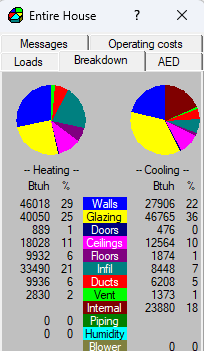
What goes into a Memphis load calculation
We run a full room-by-room ACCA Manual J using Shelby County's actual design conditions — not a zone average or a national default. Every factor comes from the plans:
| Factor | Why it matters in Memphis |
|---|---|
| Latent (moisture) cooling load | Mississippi River basin humidity makes Memphis's latent load significant — calculated separately to prevent short-cycling and humidity problems at temperature. |
| Winter heating load | 17°F design temperature is colder than zone peers. Every wall, window, ceiling, and foundation detail is counted against the real number, not a zone average. |
| Heat pump balance point | At 17°F, heat pumps need careful sizing. The balance point — where backup heat must engage — is calculated for Memphis's actual conditions, not a generalized southeast climate. |
| Actual envelope assemblies | Midtown bungalows, post-war ranch homes, and new Germantown construction all have different insulation levels and infiltration rates — read from the actual plans, not assumed. |
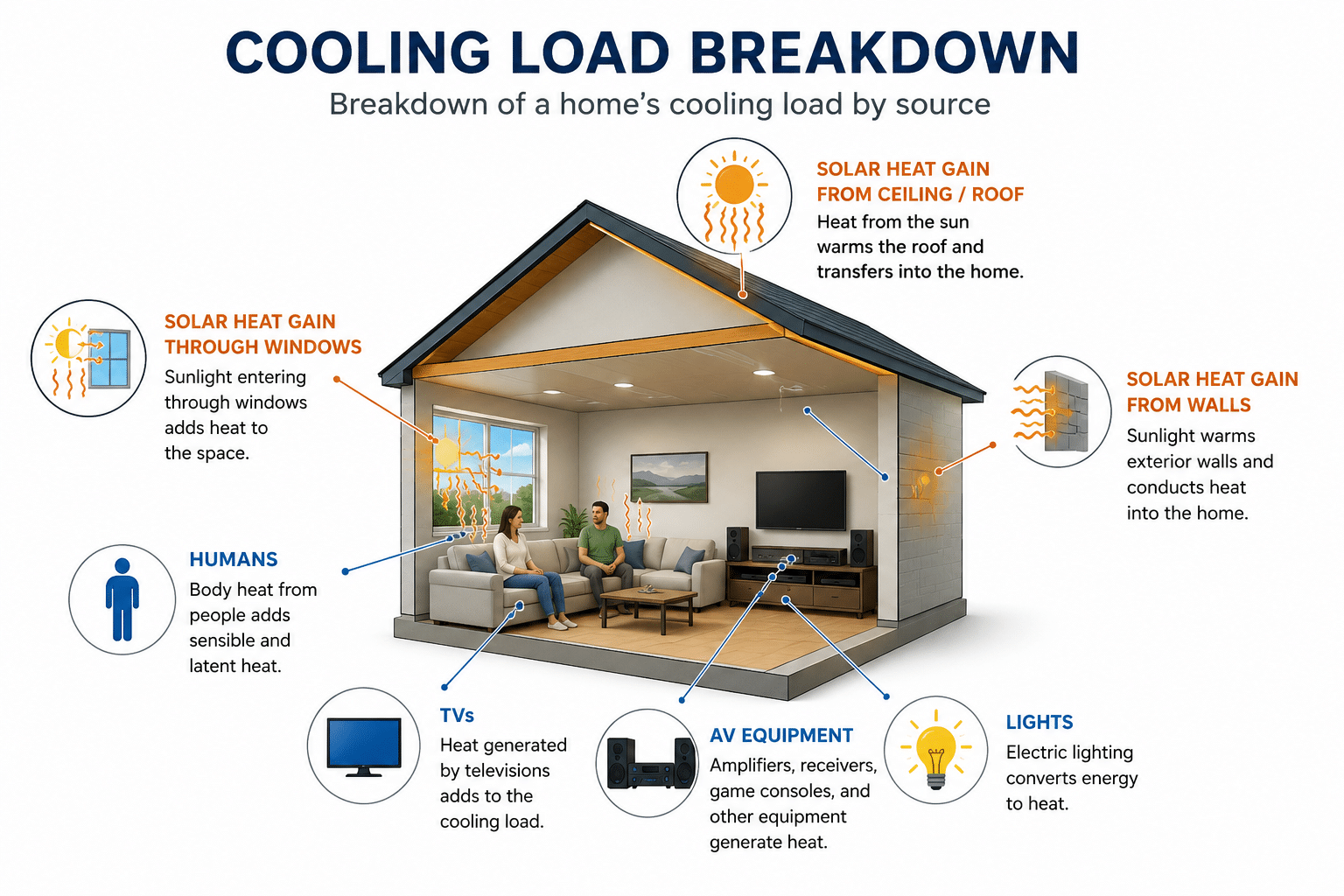
| Window orientation & solar gain | Summer sun on south and west glass is a leading cooling driver — each glazing counted by direction and specification. |
The result is the honest heating, cooling, and dehumidification load your equipment should be sized to — the foundation for selecting the right equipment and designing ducts that deliver conditioned air to every room.
Who we work with in the Memphis area
We provide Memphis and Mid-South load calculations for builders, HVAC contractors, architects, and homeowners across Shelby County and the surrounding region. Houses are our specialty — we also take on select light commercial such as small offices and recreation centers. We serve Memphis, Germantown, Collierville, Bartlett, Cordova, Lakeland, Arlington, Millington, DeSoto County MS, and the broader Mid-South metro — and we work nationwide.
How Memphis fits the bigger picture
A Memphis load calculation is one application of the same ACCA methodology we run everywhere — the climate inputs change, the rigor doesn't. For the full method, start with our Manual J load calculation overview, then see how heat gain and heat loss move through a home across both seasons. Working in nearby Zone 3A markets? See our Nashville, Atlanta, or Birmingham pages, or browse our full areas served.
Frequently asked questions
What climate zone is Memphis in for HVAC load calculations?
Memphis is in IECC Climate Zone 3A, classified as mixed-humid. It is a genuine dual-season climate with a summer design temperature around 97°F and a winter design temperature around 17°F. The Mississippi River basin amplifies summer humidity, making Memphis's latent cooling load larger than the zone label alone suggests.
How is Memphis different from Nashville for HVAC sizing?
Both cities are in IECC Zone 3A, but they present different challenges. Nashville is the colder of the two in winter at around 13°F versus Memphis's 17°F. Memphis has a higher summer latent load driven by Mississippi River basin humidity. Nashville's rapid weather swings from the Appalachian front differ from Memphis's more gradual seasonal transitions. Both require careful dual-season sizing.
Why is Memphis's humidity load so significant if it is not on the Gulf Coast?
Memphis sits on the Mississippi River floodplain, and the river's presence amplifies humidity through evaporation and the regional moisture it draws. Summer humidity levels in Memphis can rival Gulf Coast conditions on the latent load metric. An oversized system that short-cycles will cool the air to the thermostat set point without ever running long enough to remove that moisture.
Does Memphis need careful heating load sizing?
Yes. Memphis's 17°F winter design temperature is colder than Atlanta and Birmingham, both at 22°F. That 5-degree difference is meaningful for heating load sizing and for heat pump balance point calculations — the temperature below which the heat pump needs backup heat to maintain the set point. Equipment sized for a warmer Zone 3A city will be undersized in Memphis on the coldest nights.
Do you serve DeSoto County Mississippi and the surrounding Mid-South?
Yes. We serve the full Memphis metro including Shelby County TN, DeSoto County MS, Tipton County TN, and surrounding Mid-South communities. We handle both Tennessee and Mississippi energy code requirements and work nationwide.
An accurate, code-ready ACCA Manual J using Mid-South design conditions — sized for Memphis's Mississippi River humidity, 97°F summer load, and the 17°F winter that catches Zone 3A estimates off guard.
See pricing & start your load calculation →