
Manual J Load Calculations · San Antonio & Bexar County
San Antonio Manual J Load Calculations
Accurate, code-ready load calculations built for South Texas's Zone 2A climate — brutal summer heat, unpredictable winter cold snaps, and the dual-season sizing that San Antonio demands.
- Climate zone: IECC Zone 2A — hot-humid, dual-season.
- Summer design temp: around 100°F — large sensible and latent cooling load.
- Winter design temp: around 25°F — a real heating load, with hard freeze risk.
- Humidity: Gulf moisture reaches San Antonio — the latent load is real, not negligible.
- We serve San Antonio, Bexar County, and the surrounding metro — residential plus select light commercial.
Why San Antonio sizing is a two-season problem
San Antonio sits in IECC Climate Zone 2A — the same zone as Houston and New Orleans — but with a character all its own. It's far enough inland and far enough north that winters genuinely bite, while summers rival the Gulf Coast for heat and humidity. That combination means both ends of the load have to be calculated correctly:
- The cooling load is large and leads. Design temperatures around 100°F with Gulf-sourced humidity mean a substantial sensible cooling load and a real latent (moisture) component. Equipment sized only for temperature leaves a San Antonio home cool but clammy.
- Winter is not optional. San Antonio's winter design temperature drops to around 25°F, and the region has experienced hard freezes. The heating load is real, and a heat pump sized purely for cooling may fall short on the coldest nights.
- Rapid weather swings are the signature challenge. San Antonio can swing from 80°F to 30°F in 24 hours when a blue norther rolls through. Equipment and ductwork have to handle both extremes reliably.
- Oversizing backfires in this climate. An oversized system short-cycles, blasts cool air, shuts off before removing humidity, and leaves the house uncomfortable on muggy days — exactly the wrong result in a Gulf-influenced climate.
San Antonio design specifications at a glance
| San Antonio design specification | Technical requirement |
|---|---|
| IECC climate zone | 2A (Hot-Humid) |
| Summer design temp | ~100°F |
| Winter design temp | ~25°F — real heating load, hard freeze risk |
| Primary code | Texas Building Energy Code (IECC-based) |
| Key challenge | Large cooling load + real winter + rapid temperature swings |
What goes into a San Antonio load calculation
We run a full room-by-room ACCA Manual J using Bexar County's design conditions, not a national average. That means accounting for:
| Factor | Why it matters in San Antonio |
|---|---|
| Summer & winter design temps | Zone 2A's wide swing — 100°F summer, 25°F winter — so both loads are sized to real local conditions. |
| Latent (moisture) load | Gulf humidity reaches San Antonio — the latent load is real and calculated separately from sensible cooling. |
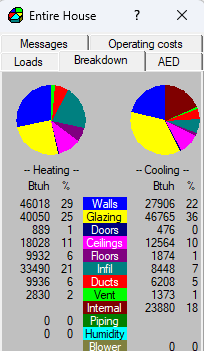
| Window orientation & SHGC | Intense summer sun makes solar gain a top cooling driver; each glazing counted by direction and glass spec. |
| Insulation & envelope | Zone 2A baselines checked against actual assemblies — the envelope has to handle both heat and cold. |
| Infiltration & ventilation | Hot, humid outdoor air entering the home is a load in summer; cold air infiltration matters in winter. |
The result is the honest heating, cooling, and dehumidification load your equipment should be built around — the foundation for selecting the right equipment and designing ducts that deliver it to every room.

Who we work with in the San Antonio area
We provide San Antonio and Bexar County load calculations for builders, HVAC contractors, architects, and homeowners — anyone who needs a clean, defensible number for permitting, equipment selection, or a comfort problem that won't go away. Houses are our specialty; we also take on select light commercial such as small offices and recreation centers. We serve San Antonio, New Braunfels, Boerne, Converse, Schertz, Seguin, Kerrville, and the surrounding metro — and we work nationwide.
How San Antonio fits the bigger picture
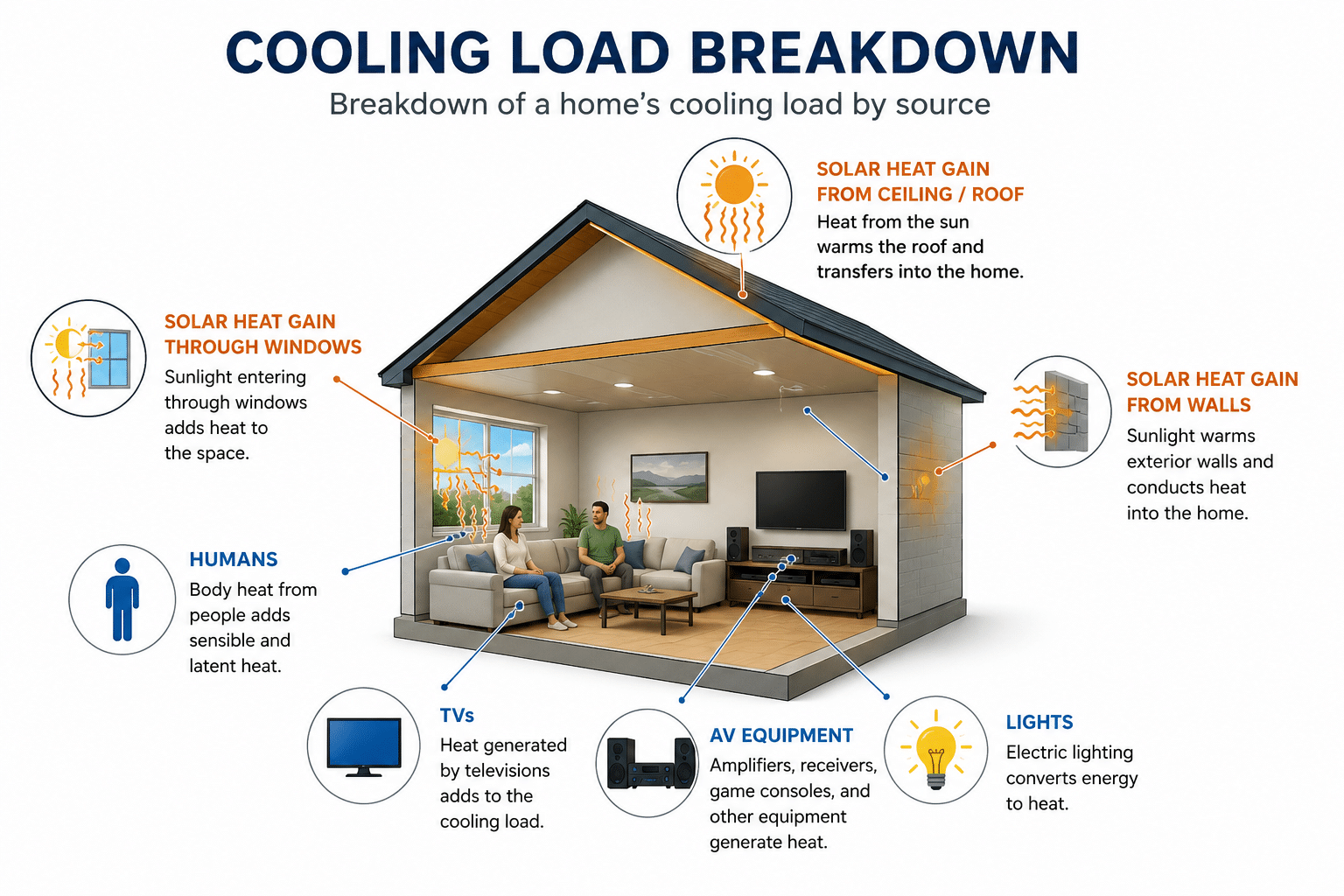
A San Antonio load calculation is one application of the same ACCA methodology we run everywhere — the climate inputs change, the rigor doesn't. For the full method, start with our Manual J load calculation overview, see how heat gain and heat loss move through a home across both seasons, or read why hot, humid climates demand extra care on the moisture load. Working another Texas market? See our Dallas and Fort Worth pages, or browse our full areas served.
Frequently asked questions
What climate zone is San Antonio in for HVAC load calculations?
San Antonio is in IECC Climate Zone 2A, classified as hot and humid. It is a dual-season climate with a large summer cooling load at design temperatures around 100°F and a real winter heating load at design temperatures around 25°F, with hard freeze risk.
Does San Antonio need to size for heating as well as cooling?
Yes. Unlike South Texas near the Gulf, San Antonio winters drop to a design temperature around 25°F and the region has experienced hard freezes. The heating load is real and must be sized properly alongside the summer cooling load. A heat pump sized only for cooling may fall short on the coldest nights.
How is San Antonio different from Houston for HVAC sizing?
Both cities are in IECC Zone 2A, but San Antonio is further inland and north, so its winter design temperatures are colder and its humidity is somewhat lower than Houston's Gulf Coast conditions. San Antonio's rapid temperature swings — blue northers can drop temperatures 50°F in hours — make dual-season sizing especially critical.
Why does humidity matter in San Antonio if it is not on the Gulf Coast?
Gulf moisture regularly reaches San Antonio via southerly flow, particularly in summer. The latent cooling load is real and must be calculated separately from sensible cooling — a system sized only for temperature can leave a San Antonio home cool but humid, which is exactly what oversized equipment does when it short-cycles.
Do you serve all of the San Antonio metro?
Yes. We provide residential load calculations across San Antonio, Bexar County, New Braunfels, Boerne, Converse, Schertz, Seguin, and the surrounding metro, plus select light commercial such as small offices and recreation centers, and we work nationwide.
An accurate, code-ready ACCA Manual J using Bexar County's real design conditions — sized for both the 100°F summer and the hard winter freeze risk.
See pricing & start your load calculation →